EVENT
May Summit Prioritizes Trade and Security,
Downplays Human Rights
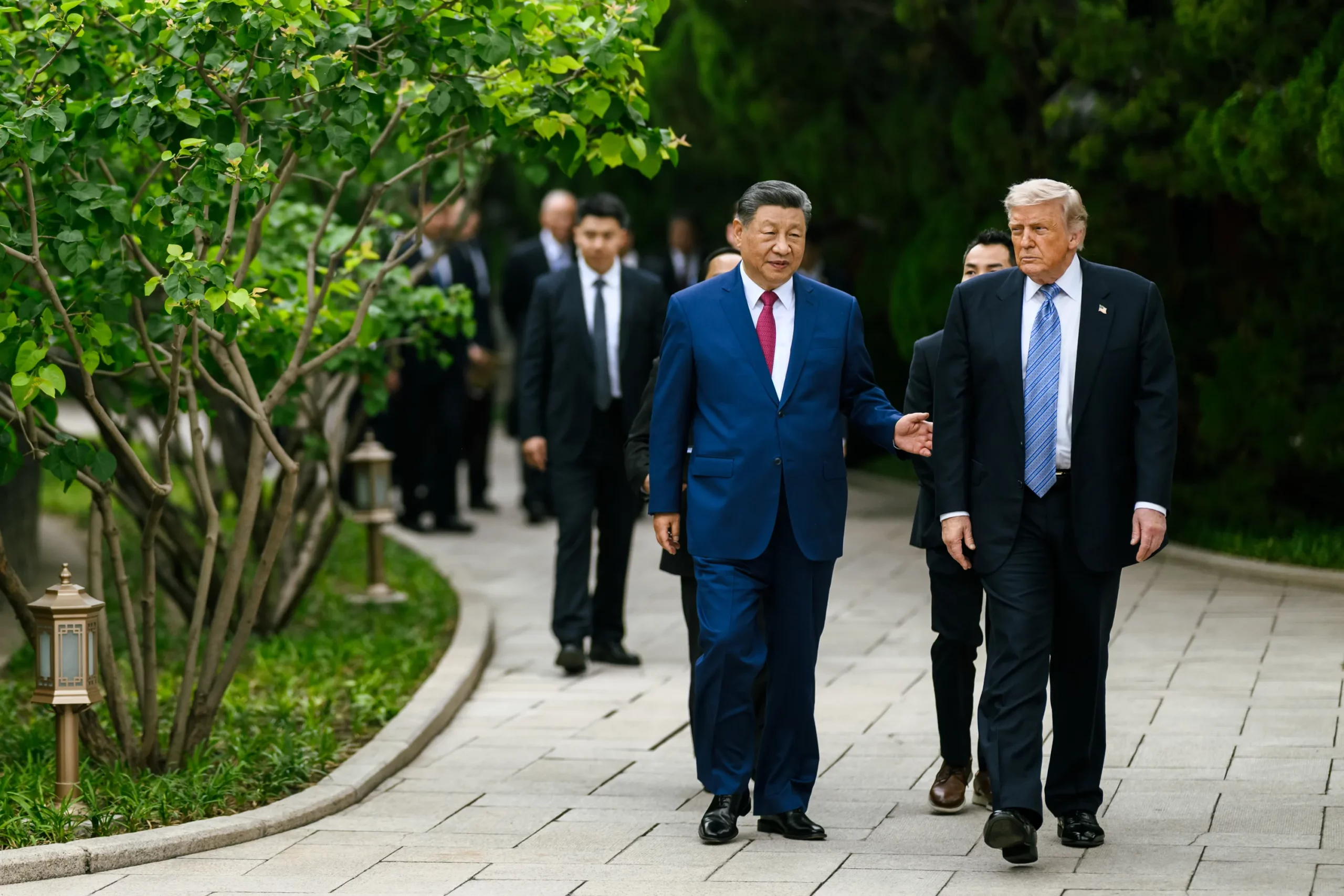
Assessing the results of the May summit in Beijing between President Donald Trump and President Xi Jinping is difficult. No joint statement was issued (the last one was issued in 2016), and both parties have offered different takes on what was achieved.
Although the truce in the trade war between the two countries in Busan, South Korea in October 2025 was not formally extended, it remains in force with new commitments on agricultural trade and export controls.
Taiwan was discussed at length. Mr. Xi warned Mr. Trump not to provoke “pro-independence separatists in Taiwan,” and specifically warned against selling arms to Taiwan. After initially suggesting that he would speak by telephone to Taiwan’s president, Mr. Trump appears to have backed down – no call is expected to take place. Mr. Trump has paused future arms sales to Taiwan. Under the Six Assurances Policy dating back to Ronald Reagan’s presidency, the United States committed to not discussing arms sales to Taiwan with China. Mr. Trump made it clear he no longer feels bound by that policy.
The United States was looking for a Chinese commitment to purchase 500 Boeing aircraft. In the event, China indicated it would purchase 200, subject to conditions. The United States agreed not to impose new sanctions on Chinese companies. However, after the summit, the Pentagon announced that major Chinese companies like Alibaba, EV maker BYD, and tech giant Baidu would be added to its “military company” blacklist. On June 22, 2026, China’s Commerce Ministry retaliated by announcing that Chinese firms would be barred from selling “dual-use” products to 10 American military-related firms. China’s Finance Ministry then announced that Chinese government entities would be prohibited from buying products from 46 American companies.
The Chinese side indicated it would extend the policy on rare earths export allowing for the purchase of materials critical for the manufacture of a wide range of products. On June 10, 2026, the US-China Business Council issued a statement that certain rare earth elements and permanent finished magnets were “nearly unobtainable” by American companies.
The Chinese side is said to have agreed to buy a minimum of $17 billion in farm goods in 2026, 2027, and 2028. Breakdown of which products in what quantities are covered is not available. According to the Americans, it pledged to lift the ban on purchases of American beef and to follow through on commitments to purchase large quantities of soybeans. The two countries agreed to establish boards of trade and investment.
The Israeli American war on Iran was discussed. China supported the effort to reopen the Strait of Hormuz. After the ceasefire agreement was extended for 60 days on June 18, Mr. Trump thanked China for “staying neutral” during the conflict between the United States and Iran.
Trump reportedly asked for Xi’s help in ending the war between Ukraine and Russia, which invaded Ukraine in 2022. According to the White House, both sides agreed to “build on progress” to halt the flow of fentanyl precursors to the United States.
Human Rights
Mr. Trump claims to have raised the cases of Hong Kong pro-democracy publisher and activist Jimmy Lai and house church leader Pastor Ezra Jin. According to Trump, Mr. Xi made it clear that clemency for Jimmy Lai is difficult to consider (Trump likened Lai to his political foe James Comey), but that he is “open” to considering clemency for Ezra Jin. The Chinese side has not confirmed this news. In any event, both men remain in custody. Pastor Jin’s family maintains that he is very ill and needs medical treatment.
Prior to the summit, the U.S. State Department compiled a list of American citizens and permanent residents to be handed over to China’s Ministry of Foreign Affairs. It is not known whether the list was in fact submitted. In any event, none of the names on the list have been granted clemency, to the best of Dui Hua’s knowledge.
The New York Times published a story on the detention of American citizen and activist on Burmese human rights and democracy activist U Min Zin in Kunming, Yunnan. The detention, said to have taken place on June 10, 2026, accuses U Min Zin of espionage, a crime of endangering state security. Dui Hua is aware of another detention of an American citizen, this time for an economic crime, a serious accusation, that could lead to severe punishment, if tried and convicted.
Pagaentry and Speeches
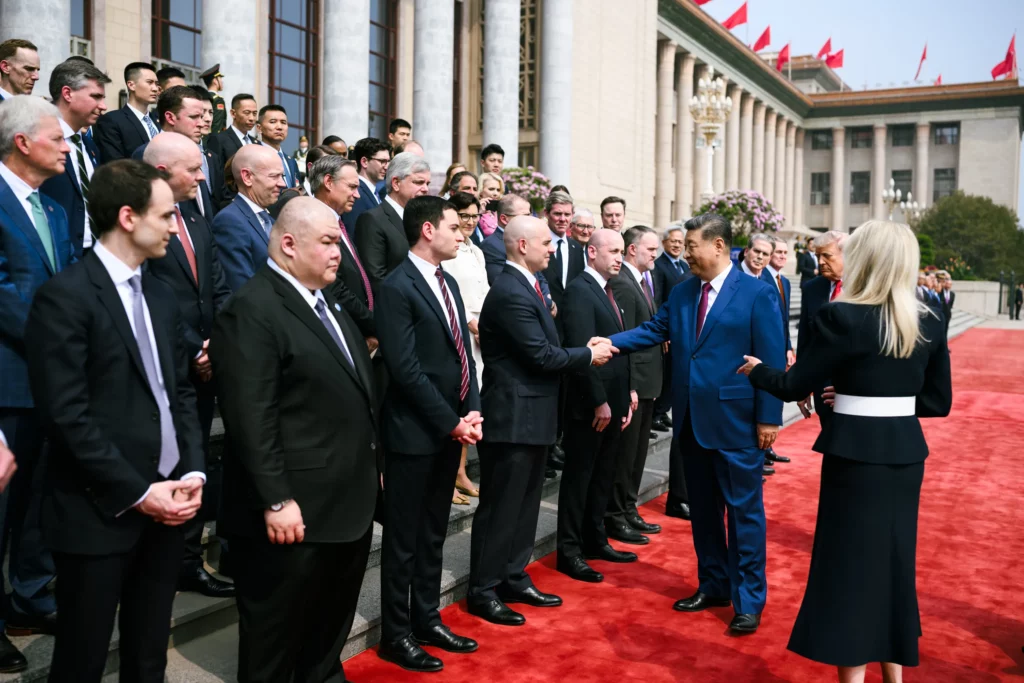
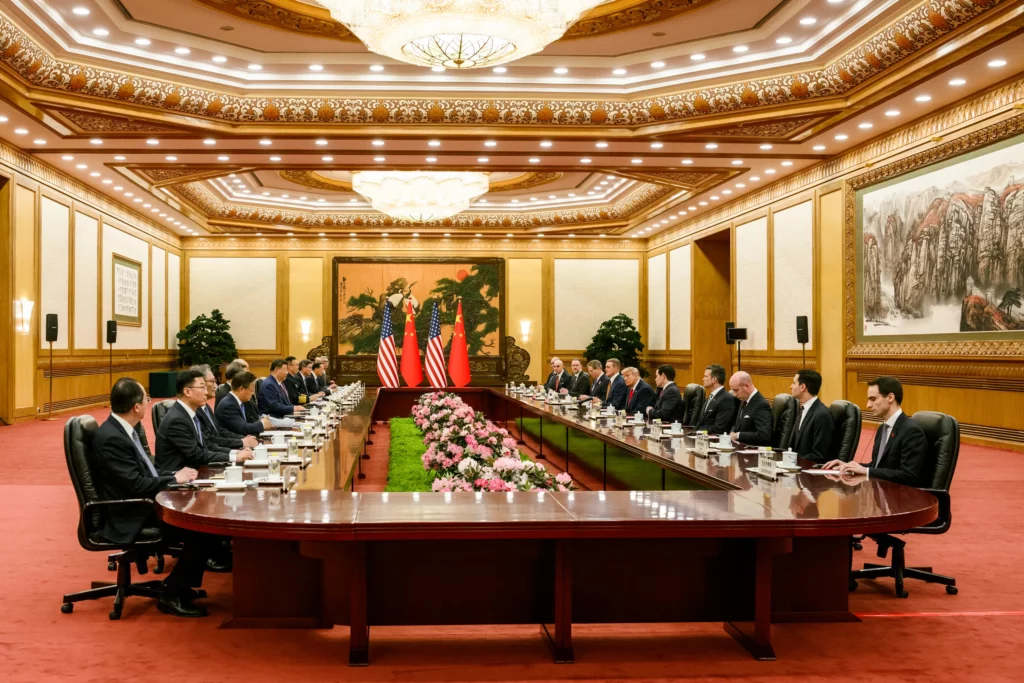
The summit between the two presidents will be remembered for the pomp and pageantry, the visits to historic sites (including the seat of power, Zhongnanhai), and, to a lesser extent, the speeches.
In his remarks at the summit, Mr. Trump praised Mr. Xi effusively. He remarked that it is an honor to call Xi a friend and called him a “very smart man” with “great stature.” Xi sat nearby as encomiums were spoken, silent with the faint glimmer of a smile on his face. What was the president of China thinking?
Perhaps he was reflecting on the words of China’s ancient military strategist, Sun Tzu in his Art of War, believed to have been authored more than 2,000 years ago: “Don’t be afraid of enemies who attack you. Be afraid of friends who flatter you.”
PUBLICATIONS HIGHLIGHTS
John Kamm Remembers
From John Kamm Remembers, a series written by Dui Hua’s founder recounting his advocacy for prisoners in China.
Lists and Prisons
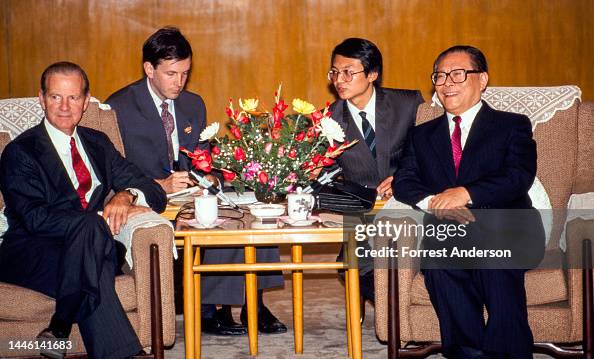
In the aftermath of the 1989 Tiananmen Square crackdown, many governments around the world imposed sanctions on China, and a quiet, painstaking effort began to account for the thousands of people detained in the protests’ wake. Read more
A Prison for Women
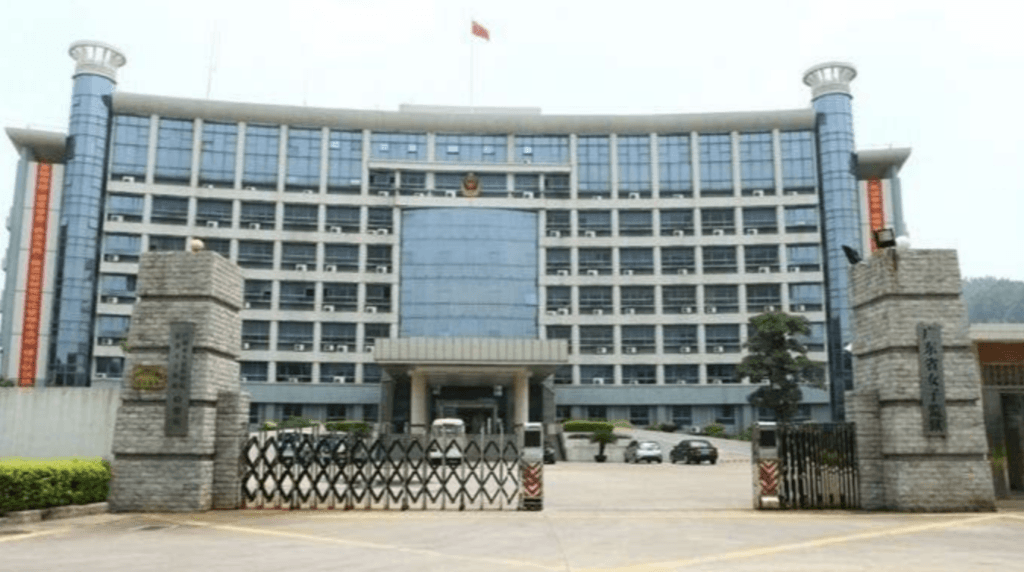
One of the late Thai Princess Bajrakitiyabha’s greatest legacies was the adoption of universal standards for the treatment of women prisoners by the United Nations. Known as the Bangkok rules, Dui Hua organized an international symposium in 2014 to discuss its impact. This is the story of that symposium. Read more
Prisoner Updates
Dui Hua’s Prisoner Updates provide the latest information staff researchers have uncovered through online and library research and through direct dialogue with the Chinese government.
Thirty-One Christians Sentenced in Major Suizhou Church Case
Thirty-one Christians associated with the Full Scope Church (全范围教会) in Suizhou, Hubei, have received prison sentences in one of the largest recent crackdowns of Christian believers in recent years. Read more
Student Sentenced to Six Years After Returning to China
Chinese national Cheng Fangwei (程方维), a former student at the University of Sydney, has been sentenced to six years’ imprisonment for splittism. After returning to China in late 2024, he lost contact with his famil yand was later confirmed to have been detained and convicted. Read more
Dui Hua in the News
New York Times: China Arrests U.S. Scholar on Spying Charges