Tag: statistics

  • Turning over a New Leaf: Juvenile Offenders Benefit from Reform

    Turning over a New Leaf: Juvenile Offenders Benefit from Reform

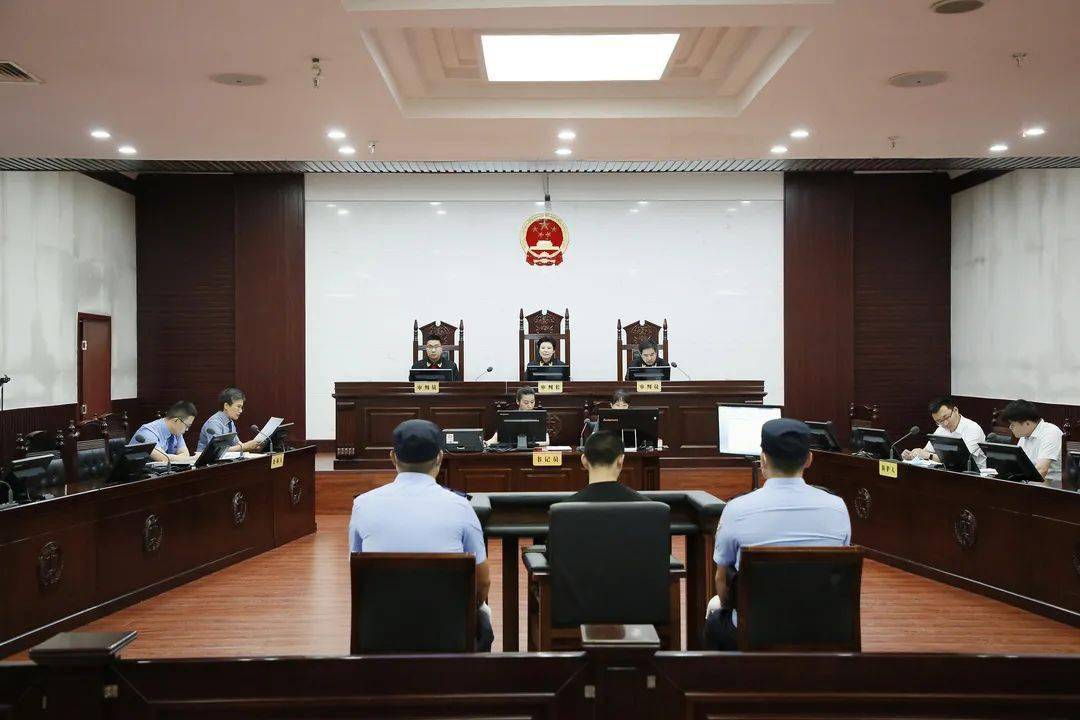
    The delegation from China’s Supreme People’s Court visiting the Juvenile Court of the City and County of San Francisco during Dui Hua’s first expert exchange in 2008. Image credit: Dui Hua

    This year marks the 15th anniversary of Dui Hua’s first expert exchange with the Supreme People’s Court (SPC) on juvenile justice, an area of concern around the globe. Beginning in 2008, Dui Hua has hosted US-China expert exchanges related to juvenile justice, women in prison, girls in conflict with the law, and child welfare. In April 2023, Dui Hua hosted “Topics in Juvenile Justice Reform: A Sino-American Exchange,” the ninth exchange involving the SPC. These exchanges address one of the few areas of human rights issues where the United States and China still engage in dialogue, in this case a dialogue that contributes to justice system reform.

    Lower Convictions for Juveniles 

    Statistics released by the SPC and Supreme People’s Procuratorate (SPP) in 2022 reveal a continuous drop in juvenile convictions, falling by more than 50 percent since 2013. The statistics also show a sharp uptick in the number of juveniles given non-arrest and non-prosecution decisions, as well as an increase in the number of juvenile records sealed. This progress in restorative justice for juveniles has occurred in the decade since China added a new section to the Criminal Procedure Law that incorporated provisions for conditional non-prosecution, record sealing, and more non-custodial measures – topics that were discussed during Dui Hua’s US-China expert exchanges.

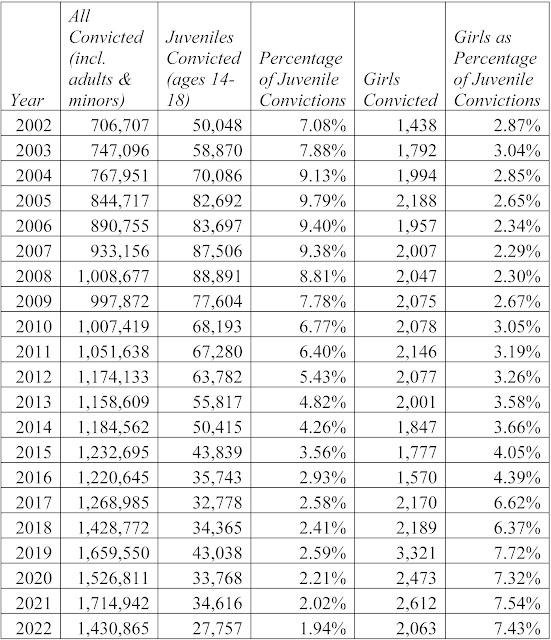
    Table 1. Total Convictions & Juvenile Convictions

    Source: National Court Judicial Statistics Bulletin 2002-2022
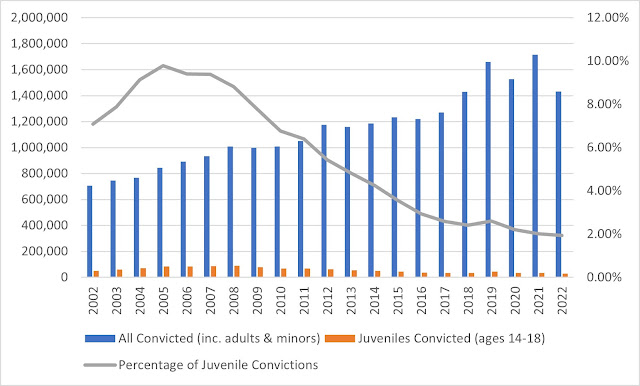
    In 2022, the number of juvenile convictions reached a record low, with only 27,757 juveniles tried nationwide. The percentage of juvenile convictions reached its peak at 9.79 percent in 2005 and remained at around 9 percent through 2008. This surge alarmed the Chinese government, and calls for juvenile justice reform increased. In 2007, senior Chinese prosecutor Dan Wei told Dui Hua executive director John Kamm that reforming the juvenile justice system had become a priority for senior leaders. The exchanges kicked off with an invitation to the SPC to study juvenile justice in the United States.
    Following the first exchange, juvenile convictions continued to decrease year-by-year. Convictions fell below 5 percent for the first time in 2013, after the revised Criminal Procedure Law came into force and codified the principle of prioritizing education over punishment. Over the last decade, the number of juvenile convictions decreased by more than 50 percent from 63,782 in 2012 to 27,757 in 2022.

    Of those 27,757 juveniles, 2,063 were girls. The number of convicted girls increased from 1,570 in 2016 to 3,321 in 2019 but dropped below 2,500 in 2020 and further to 2,000 in 2022. Despite this decrease, the number of girls convicted as a percentage of juvenile convictions has remained above 7 percent since 2019, up from 3.58 percent in 2013.

    Table 2. Total, Juvenile & Girl Convictions

    Source: National Court Judicial Statistics Bulletin 2002-2022

    Collective Efforts

    Besides fewer juvenile convictions, the SPP works in tandem with the SPC to incorporate restorative practices into its operations by approving fewer juvenile arrests and prosecutions. In 2022, prosecutors accepted and examined arrests for 49,070 minors, a drop from 55,379 in 2021. It is a sizable increase from 2020’s figure of 37,681. The approval rate for arrests of juvenile suspects in 2022 reached a record low of 31.5 percent. Of those, prosecutors approved arrests of about 15,000 minors while disapproving arrests of 34,000. The disapproval rate rose incrementally every year from 26.7 percent in 2014 to 39.1 percent in 2020. This rate exceeded 50 percent for the first time in 2021 and reached another peak of 68.5 percent in 2022.

    In the first six months of 2023, prosecutors disapproved the arrests of 20,000 juveniles. The disapproval is 67.9 percent, on par with the 2022 level.

    Table 3. Juvenile Arrests Disapproved

    Source: White Paper on Prosecutorial Practice for Minors 2014-2022

    The prosecution rate for juvenile suspects in 2022 was 47.6 percent. The number of juveniles accepted and examined for prosecution decreased year-by-year from 77,405 in 2014 to 58,307 in 2018. In 2022, the number rose back to 78,467, exceeding the 2014 prosecution rate. Despite the increase, a growing number of juvenile delinquents have been given non-prosecution over the years. In 2022, prosecutors approved the prosecution of 28,000 juveniles and disapproved 41,000 prosecutions. The disapproval rate reached a record high of 59.9 percent, up from 10.3 percent in 2013. In just one year, the number of juveniles given non-prosecution nearly doubled from 22,585 in 2021 to 41,000 in 2022.

    The non-prosecution rate in the first six months of 2023 was 56.7 percent, with a total of 18,000 juveniles given non-prosecution.

     Table 4. Juvenile Prosecutions Disapproved

    Source: White Paper on Prosecutorial Practice for Minors 2014-2022

    Of particular significance is the wider use of conditional non-prosecution, known in the United States as diversion. In 2022, 26,161 juvenile cases were diverted, and the application rate of diversion rose year-to-year from 20.8 percent in 2020 to 29.6 percent in 2021, and to 36.1 percent in 2022. In 2013, diversion was incorporated into the Criminal Procedure Law. Since 2014, the number of juveniles offered conditional non-prosecution increased eightfold.

    Table 5. Juvenile Delinquents Given Conditional Non-Prosecution
    Source: White Paper on Prosecutorial Practice for Minors 2014-2022
    Sealing Records
    Record sealing was incorporated into the Criminal Procedure Law in 2013, and prior to that it was a major topic of discussion during the expert exchanges hosted by Dui Hua. Dui Hua was assisted in preparing and conducting the exchanges by Judge Leonard Edwards of Santa Clara County, California. Judge Edwards (retired) is a recognized expert in juvenile justice in general and the sealing of juvenile records in particular.
    In China, the practice of sealing juvenile records mandates that a juvenile offender’s records be sealed after they successfully complete the probation period called for by conditional non-prosecution orders issued by the procuratorate, provided that the juvenile observes the conditions of non-prosecution and does not commit new crimes. The SPP has disclosed nationwide figures on how this restorative measure has been implemented. A total of 92,694 juveniles had their records sealed from 2020-2022. In 2022, 33,021 juvenile records were sealed, an increase from 28,163 in 2020 and 31,510 in 2021. In May 2022, the SPC, SPP and Ministry of Public Security promulgated Implementation Measures for Sealing Juvenile Criminal Records, which provides detailed standards and operational procedures for sealing juvenile criminal records.
    The drop in juvenile arrests, prosecutions, and convictions in 2022 signals a more progressive approach to juvenile justice. Although public sentiment continues to support more punitive approaches such as lowering the age of criminal responsibility from 14 to 12 in 2020, the Chinese government increasingly emphasizes rehabilitation and education as the first response to juvenile offenders. The Law on Protection of Minors, revised in 2020, refined the family guardianship system by improving guardianship measures, establishing a mandatory reporting system, and creating an information inquiry system for offenders. The law also provided more guidance on prevention and response measures for internet addiction, campus bullying, new offenses, and parental legal obligations. In the same year, the revised Juvenile Delinquency Prevention Law focused on prevention rather than punitive measures by stressing education, mental health, reduction of bullying, and multi-institutional collaboration to reduce juvenile delinquency.
    Building Safer Systems for All
    A notable omission of both laws is that they do not address gender-specific needs. It is increasingly recognized that rehabilitating girl offenders requires different approaches than those applied to boys. To raise awareness of the need for gender-specific treatment, Dui Hua formally expanded its mission in 2014 to include women and girls in conflict with the law. Later that year, Dui Hua co-hosted an international symposium on women in prison, facilitating discussions and capacity building on the Bangkok Rules, a set of regulations that provide guidance for policy makers, legislators, sentencing authorities and prison staff to meet the specific needs of women detainees and to reduce overall female imprisonment. As part of this campaign, with permission from Penal Reform International, Dui Hua released a Chinese translation of “Neglected needs: girls in the criminal justice system in 2018.” The 12-webinar International Symposium on Girls in Conflict with the Law that took place from October 2020 to March 2021, continued this campaign in an international context with input from the SPC.
    However, many countries – including both the United States and China – continue to use policies that are inadequate to address the unique needs of girls in conflict with the law. Both the Law on Protection of Minors and the revised Juvenile Delinquency Prevention Law made significant strides in improving protections for minors, but the lack of gender-specific measures needs to be addressed in the future. The drop in convictions and the rise of diversionary measures reflect the great progress made in these protections, but it is important that girls are not left behind as China’s juvenile justice system continues to reform.
  • China’s 2022 Acquittal Rate Lowest in Two Decades

    China’s 2022 Acquittal Rate Lowest in Two Decades

    A 2021 trial for a murder case, which was livestreamed on China Court Trial Online. Image credit: Kaifeng Intermediate People’s Court, Henan Province
    Acquittal rates in China have always been low, but in 2022 the number decreased to a record low. According to the most recent China Law Yearbook, an annual official compendium released in 2023 that covers 2022, only 631 individuals (0.044 percent of the 1,431,585 defendants with effective judgments) were found not guilty by criminal courts in 2022.
    The conviction rate in 2022 was 99.95 percent, a record high according to statistics in the China Law Yearbook. The acquittal rates dropped every year in the decade after 2003. The most dramatic decrease happened in 2005, when the 0.256 percent acquittal rate was less than half of 2003’s already low 0.647 percent. In 2010, the acquittal rate fell below 0.1 percent for the first time and has never returned above this level.
    Table 1.
    Source: China Law Yearbooks, 2004-2023
    When Xi Jinping began his first term as Chinese president in 2013, many legal practitioners expressed optimism that acquittal rates would approach more “normal” levels as a result of proposed legal reforms aimed to strengthen procedural justice. Although what constitutes a “normal” acquittal level is not clearly defined, a five percent rate is often cited when the topic is discussed in China. Chinese legal authorities also overturned a series of high-profile convictions and took steps to strengthen measures to exclude confessions extracted through torture and other illegal evidence.
    For 2013, the acquittal rate rose briefly for the first time since 2003, growing annually from six acquittals per 10,000 adjudications to seven. The rates remained steady, climbing at a slow pace until 2018 when they dropped again to 0.057 percent, a 37 percent decrease compared to the previous year.
    Table 2.
    Source: China Law Yearbooks, 2004-2023
    Xi has spearheaded an effort to hold judges, prosecutors, and police officers accountable for wrongful convictions in cases that have since been retried. In 2021, the Supreme People’s Procuratorate investigated all of the 246 criminal cases that were re-tried and corrected since 2018 and found that in 22 of these cases, people had been wrongly jailed for more than 10 years. More than 500 prosecutors were punished, some of whom had already retired.
    The acquittal rate saw a brief rise to 0.084 percent in 2019. However, this reversal was short-lived. In the three years that followed, the rates have again dropped, to 0.068 percent in 2020, 0.052 percent in 2021, and then to 0.044 percent in 2022.
    Acquittals are even rarer in trials of endangering state security (ESS) crimes, which include subversion, inciting subversion, splittism, inciting splittism, obtaining or providing state secrets, and espionage.  From 2013-2016, only ten people were acquitted, according to statistics released by the Supreme People’s Court. The names and other details of these ten individuals are not known. Dui Hua is not aware of any acquittals for ESS crimes after 2016.
    Table 3. ESS acquittals (effective judgments), 2013-2016
    YearNo. of Acquittals of ESS Crimes
    20132
    20142
    20150
    20166
    Source: Records of People’s Courts Historical Judicial Statistics, Criminal Trials Vol. 6, 2013-2016
    In a Human Rights Journal published in 2015, Dui Hua reported that the number of not-guilty judgments is influenced by efforts to avoid the payment of state compensation, marginalize defense attorneys, restrict judicial independence, and maintain stability. Some of these issues have continued, according to a 2022 legal journal re-posted by Shanghquan Law Firm. Additionally, judges realize that acquittals can adversely impact professional assessments for prosecutors because successful convictions are seen as a means for career advancement. There remains an unspoken rule that prosecutors can withdraw indictments and collaborate with judges to eliminate the possibility of non-guilty judgments or to hand out lighter punishments in cases where evidence against the accused is weak.
    One of the fundamental purposes of a criminal justice system is to protect innocent people from being convicted of crimes they did not commit. Despite efforts to overturn high-profile wrongful convictions, these instances likely represent a fraction of cases where defendants are wrongly charged with crimes. The persistently low acquittal rates over the years raise questions about how many more people are incarcerated for crimes they did not commit. A court which exercises its authority to acquit in accordance with the law ensures systemic justice and procedural fairness; it is fundamentally different from relying on political whims to right past wrongs. As Xi rejects the notion of judicial independence, continues his crackdown on defense lawyers, and places state security and stability maintenance above all else, there is little in place to stop the near-guaranteed high conviction rate from continuing for the foreseeable future.

    Download: China Acquittals, 2003-2022 (Excel). Source: China Law Yearbook, compiled by Dui Hua.

  • UN Submission Focuses on Persecution of Women in Unorthodox Religions

    UN Submission Focuses on Persecution of Women in Unorthodox Religions

    The logo for the Committee on the Elimination of Discrimination against Women, which monitors compliance with the Convention, both of which are abbreviated as CEDAW. Image credit: UN Office of the High Commission for Human Rights

    The number of women incarcerated in Chinese prisons has grown faster than the population of incarcerated men over the past decade, and women are disproportionately represented in criminal cases involving unorthodox religious groups. These are the main points highlighted by Dui Hua in its submission to the Committee on the Elimination of All Forms of Discrimination against Women (CEDAW)’s review of China.

    CEDAW, which also stands for the Convention on the Elimination of All Forms of Discrimination against Women and is sometimes described as an “international bill of rights for women,” is the treaty and human rights instrument adopted by the United Nations that provides guidance for nations to combat discrimination faced by women. Nations that have signed and ratified CEDAW – which includes all but six UN member states – are required to submit reports to the Committee on their compliance with the Convention every four years. NGOs are invited to make submissions informing country reports, which Dui Hua did for China’s, considered during CEDAW’s 85th session in the week of May 8, 2023.

    Dui Hua’s statement largely focused on female prisoners charged under Article 300, “organizing or using a cult to undermine implementation of the law.” The statement noted that women account for 8 percent of the prison population in China – a figure similar to that of the United States – but are thought to make up more than 40 percent of prisoners incarcerated for violating Article 300 from 1998-2016. More so, court records suggest that sentencing for these cases is comparatively harsh and that instances of clemency are rare. (The statement notes that there may have been an increase in clemency over the last two years but the lack of consistent data and transparency in legal processes makes this difficult to confirm.)

    Charts 1 and 2: Gender breakdown of unorthodox religious prisoners accused of violating Article 300 in the PPDB as of March 31, 2023.*

    *Gender is not known for all cases. Image credit: The Dui Hua Foundation

    The submission builds on the research Dui Hua initially published in its report “The Persecution of Unorthodox Religious Groups in China,” which identified a gender imbalance in sentencing under Article 300. Dui Hua’s Political Prisoner Database (PPDB) holds records on 11,400 women who have been subject to coercive measures for violating Article 300 due to their participation in unorthodox religious groups, which the Chinese Communist Party regards as cult organizations practicing non-state sanctioned faiths.

    The statement also noted that women are the main target of negative stereotypes in China’s anti-cult propaganda. This messaging often relies on stereotypes of middle-aged, rural women being “weak-willed and psychologically vulnerable” and more vulnerable to “coercion or monetary enticements from cult organizations.” Such messaging, which comes from both national and regional organizations, itself seems to violate Article 5 of CEDAW which mandates that state parties take all appropriate measures to eliminate “prejudices and customary and all other practices which are based on the idea of inferiority or the superiority of either of the sexes or on stereotyped roles for men and women.”

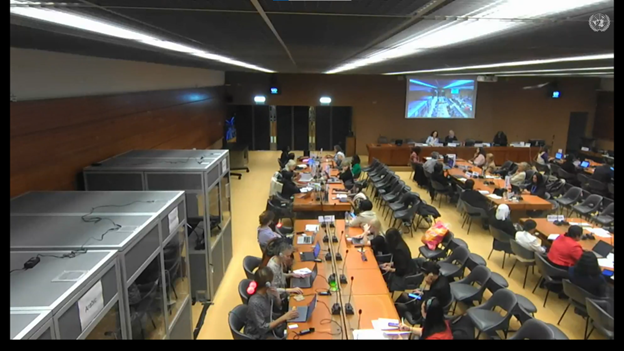
    An image from the opening session of CEDAW’s 85th session on May 8, 2023. Image credit: UN Web TV

    Another focus of Dui Hua’s submission to China’s state report was the decline in judicial transparency. Dui Hua ended its submissions by recommending that the Chinese government increase the use of non-custodial measures and clemency for women prisoners and improve judicial transparency, writing:

    Dui Hua urges the Chinese government to resume providing meaningful access for the public to judicial documents, including indictments, court judgments, and decisions of all cases, regardless of the criminal offense involved. Transparency is particularly lacking in provinces with high populations of ethnic minorities. It also helps the public understand the reasons why women are placed in custody for peacefully pursuing their religious faith and other criminal offenses.   

    This is not the first time Dui Hua has made a statement to a UN body concerning China’s treatment of female prisoners. Dui Hua previously made submissions to CEDAW during China’s previous review in 2014 and, more recently, to the Working Group on Discrimination Against Women in Law and Practice in June 2019.

    Of the 193 UN member states, 189 have ratified CEDAW, binding them to the treaty and mandating that they participate in regular review every four years. The United States has not ratified CEDAW, placing it among a small group of countries – Iran, Somalia, Sudan, Tonga, Palau – and the Holy See that have yet to bind themselves to the treaty.

    Read the full statement 

    Read the report “The Persecution of Unorthodox Religious Groups in China” 

  • Behind the Rarity of China's Acquittals

    Image credit: 163.com

    Acquittals are rare in China. The most recent China Law Yearbook, an official compendium, states that for every 10,000 people tried in criminal courts in 2013, just seven were acquitted. Although the number of people found not guilty rose incrementally in 2013, it plummeted from 6,617 to 727 per year between 2000 and 2012. Meanwhile the number of people whose cases were adjudicated trended upward, causing acquittals to account for just 0.07 percent of completed trials in 2013, falling from 1.02 percent in 2000. In comparison to China, Japan and Russia acquit less than 1 percent of defendants, while the Department of Justice reports that since 2001, the United States has convicted more than 90 percent of defendants each year.

    Adjudications and acquittals for defendants in criminal trials, 2000-2013
    YearAdjudicationsAcquittals% Acquitted
    2000648725*66171.02
    2001740000*65970.89
    200270670749350.70
    200374709648350.65
    200476795122920.30
    200584471721620.26
    200689075517130.19
    200793315614170.15
    2008100867713730.14
    200999787212060.12
    201010074199990.10
    201110516388910.08
    201211741337270.06
    201311586098250.07
    * Dui Hua estimates
    Sources: Dui Hua, China Law Yearbook

    China Law Yearbook does not typically disaggregate acquittal data by crime, but in select years it has provided the number of people found not guilty in trials for endangering state security (ESS) and dereliction of military duty. (Dui Hua research indicates that ESS accounts for the vast majority of cases when these two crime categories are combined.) In 2002, only one of the 366 people tried in these types of cases was acquitted, while in 2004, there were five in 336. None of the 730 individuals tried for ESS with records in Dui Hua’s Political Prisoner Database was found not guilty.

    Indirectly addressing the paucity of acquittals as part of judicial reform efforts, the Central Politico-Legal Committee (PLC) announced its decision on January 20, 2015, to remove indictment and conviction rates from the list of performance indicators applied to judicial officials. While this should reduce pressure to convict, the number of not-guilty verdicts will continue to be influenced by efforts to avoid the payment of state compensation, marginalize defense attorneys, restrict judicial independence, and maintain stability, among others.

    Procuratorates

    Chinese prosecutors tend to explain low acquittal rates as an indicator of good work. In 2012, a Beijing prosecutor told Legal Daily that a high level of “judicial precision” allowed good prosecutors to “filter out” cases likely to result in acquittal so that the majority of people standing trial were “guilty.” A Guangdong High People’s Court judge reiterated this sentiment by telling the paper that, “The reduction in acquittals, to a very large extent, is a manifestation of increasing awareness about evidence and law in our investigative and prosecutorial units.”

    For prosecutors, acquittals signify failure to demonstrate guilt, and at least prior to the implementation of the PLC decision, they have a direct negative impact on performance evaluations. In 2005, the Supreme People’s Procuratorate (SPP) issued evaluation measures stating that acquittal rates should not exceed 0.2 percent. Local procuratorates followed suit by putting forth “zero acquittals” as the ultimate goal in their annual work reports. Among various performance indicators, the acquittal rate was the most important, legal scholar Yuan Yicheng told Legal Daily in 2012.

    Rather than risk acquittal, it is an unspoken rule that prosecutors decide to withdraw indictments. The procuratorate may formally drop the charges against a criminal suspect or remand a case for supplementary investigation, both with the approval of the court. If additional investigation is conducted, a suspect may be unable to fully regain their personal freedom during that time. By deciding not to pursue charges, prosecutors not only reduce acquittals but also dodge legal repercussions, since people without not-guilty verdicts face barriers to filing complaints against or winning compensation from government bureaus that wrongfully deprive them of their personal freedom.

    Called a “black-box operation” by Xiaoxiang Morning Post, indictment withdrawals are not covered by the Criminal Procedure Law. Instead they are outlined in judicial interpretations and opinions issued by the SPP and Supreme People’s Court (SPC). After conducting a study on the use of the practice between 2003 and 2005, the SPP reported finding numerous problems, according to legal scholar Gao Tong. These problems included prosecutors opting to withdraw indictments in instances where they feared the defendant would be found not guilty and laxity in carrying out legal oversight. The SPP’s 2005 evaluation measures state that decisions not to pursue charges should occur in less than 0.8 percent of cases, four times the target for acquittals.

    Indictment withdrawals are not uncommon in political cases. In Gansu, Chen Pingfu (陈平福) was placed under residential surveillance in June 2012 for writing dozens of blog posts about the social injustices he experienced as a laid-off teacher, petitioner, and street performer. Chen was formally arrested for inciting subversion in August, but following an outpouring of public support for his release, his indictment was withdrawn on December 14, 2012. Chen’s defense lawyer claimed that he never saw the prosecutors’ application for withdrawal and was not informed of the basis for withdrawing the indictment. In a separate case, the Beijing People’s Procuratorate decided not to pursue charges against Wang Gongquan (王功权) on January 21, 2015. The prominent businessman was a cofounder, along with Xu Zhiyong (许志永), of the New Citizens’ Movement, which advocates for education for migrant children and transparency in the assets of government officials. The withdrawal followed a televised confession Wang made in December 2013 and his release on bail in January 2014.

    Courts

    Prosecutors issue indictments, but it is the courts that hand down convictions. Because convictions are the primary basis upon which their promotions are decided, “prosecutors need to run daily to the courts to beg [judges] not to hand down acquittals,” according to a mid-ranking prosecutor cited in an article published in Contemporary Law Review by legal scholar Zhu Tonghui. Painting a picture of insufficient checks and balances within the judiciary, Zhu notes that judges tend to approve most indictment withdrawals in part because they are aware of the adverse impact acquittals have on prosecutors. Courts and procuratorates tend to work together to rule out the possibility of not-guilty verdicts, according to an article published in the Journal of Hubei Correspondence University in 2014.

    Like prosecutors, judges see convictions as a means to career advancement, but they also see them as tools for maintaining stability. Judges worry that finding defendants not guilty causes an uptick in petitioning because victims’ family members may feel that the judiciary failed to deliver justice and punish the real culprits, the SPC Research Office wrote in 2014. Acquittals in appellate trials are equally undesirable because higher-level courts do not want the public to view lower-court verdicts as “wrongful,” said Yuan Yicheng. Gao Tong says that acquittals often spark fierce public sentiments, where judges are denounced as “corrupt” or “abusing power.”

    Some legal experts believe that courts reconcile unfounded guilty verdicts by issuing light or suspended sentences or exempting defendants from criminal punishment. China Law Yearbook shows that the percentage of convicted persons who were exempt from criminal punishment remained relatively stable around 1.67 percent from 2003 through 2013, however, the number of people receiving suspended sentences increased annually, going from 18.47 percent in 2003 to 30.78 percent in 2013. Critics argue that a portion of these exemptions and suspensions represent people who should have been acquitted.

    Defense lawyers

    Within the Chinese criminal justice system, defendants have little support. In 2012, former All China Lawyers Association president Yu Ning publicly stated that defense lawyers participated in fewer than 30 percent of all criminal cases nationwide with participation as low as 12 percent in some provinces. Defense lawyers face political and professional retaliation for performing their duties, and are often barred from routine activities such as meeting with their clients and obtaining case documents from police, prosecutors, and judges. The challenges facing defense lawyers are widely documented.

    Stability maintenance

    The decision of guilt or innocence is beyond the courts when the PLC intervenes in cases deemed to have far-reaching consequences for social or political stability. In these “stability maintenance” interventions, the PLC encourages coordination between courts, procuratorates, and police. China Youth Daily reported on this type of intervention in January 2014. In this instance, the local PLC in Gushi County, Henan Province, issued a “red-head document” requesting that the county court convict Wu Yunqiang (吴运强) on the grounds that an acquittal would lead to “negative social consequences” and “render local land-administration regulations useless.” The county accused Wu of illegal land use in early 2009 after he sold his kindergarten in Zhongshan, Guangdong Province. Wu was convicted and given a suspended sentence in November 2011, but two years later the Xinyang Intermediate People’s Court overturned the verdict and ordered a retrial due to insufficient evidence. The procuratorate then formally withdrew the indictment in December 2013. However, due in large part to PLC intervention, Wu was re-indicted. In October 2014 he was sentenced to three years in prison for illegal transfer of land-use rights despite the fact that the procuratorate reportedly failed to present new evidence to substantiate his guilt.

    Policies to manipulate verdicts based upon their social and political outcome undermine judicial independence and justice itself. During a speech at the National Prosecutors’ College in August 2014, SPP Procurator-General Cao Jianming acknowledged the prevention of wrongful convictions as the biggest challenge for prosecutors and urged judicial officials to hold on to the presumption of innocence. Coordinated or not, as wrongful convictions continue to be exposed by Chinese news media, it is increasingly difficult to view China’s acquittal rate as simply good work.

  • Behind the Rarity of China's Acquittals

    Image credit: 163.com

    Acquittals are rare in China. The most recent China Law Yearbook, an official compendium, states that for every 10,000 people tried in criminal courts in 2013, just seven were acquitted. Although the number of people found not guilty rose incrementally in 2013, it plummeted from 6,617 to 727 per year between 2000 and 2012. Meanwhile the number of people whose cases were adjudicated trended upward, causing acquittals to account for just 0.07 percent of completed trials in 2013, falling from 1.02 percent in 2000. In comparison to China, Japan and Russia acquit less than 1 percent of defendants, while the Department of Justice reports that since 2001, the United States has convicted more than 90 percent of defendants each year.

    Adjudications and acquittals for defendants in criminal trials, 2000-2013
    YearAdjudicationsAcquittals% Acquitted
    2000648725*66171.02
    2001740000*65970.89
    200270670749350.70
    200374709648350.65
    200476795122920.30
    200584471721620.26
    200689075517130.19
    200793315614170.15
    2008100867713730.14
    200999787212060.12
    201010074199990.10
    201110516388910.08
    201211741337270.06
    201311586098250.07
    * Dui Hua estimates
    Sources: Dui Hua, China Law Yearbook

    China Law Yearbook does not typically disaggregate acquittal data by crime, but in select years it has provided the number of people found not guilty in trials for endangering state security (ESS) and dereliction of military duty. (Dui Hua research indicates that ESS accounts for the vast majority of cases when these two crime categories are combined.) In 2002, only one of the 366 people tried in these types of cases was acquitted, while in 2004, there were five in 336. None of the 730 individuals tried for ESS with records in Dui Hua’s Political Prisoner Database was found not guilty.

    Indirectly addressing the paucity of acquittals as part of judicial reform efforts, the Central Politico-Legal Committee (PLC) announced its decision on January 20, 2015, to remove indictment and conviction rates from the list of performance indicators applied to judicial officials. While this should reduce pressure to convict, the number of not-guilty verdicts will continue to be influenced by efforts to avoid the payment of state compensation, marginalize defense attorneys, restrict judicial independence, and maintain stability, among others.

    Procuratorates

    Chinese prosecutors tend to explain low acquittal rates as an indicator of good work. In 2012, a Beijing prosecutor told Legal Daily that a high level of “judicial precision” allowed good prosecutors to “filter out” cases likely to result in acquittal so that the majority of people standing trial were “guilty.” A Guangdong High People’s Court judge reiterated this sentiment by telling the paper that, “The reduction in acquittals, to a very large extent, is a manifestation of increasing awareness about evidence and law in our investigative and prosecutorial units.”

    For prosecutors, acquittals signify failure to demonstrate guilt, and at least prior to the implementation of the PLC decision, they have a direct negative impact on performance evaluations. In 2005, the Supreme People’s Procuratorate (SPP) issued evaluation measures stating that acquittal rates should not exceed 0.2 percent. Local procuratorates followed suit by putting forth “zero acquittals” as the ultimate goal in their annual work reports. Among various performance indicators, the acquittal rate was the most important, legal scholar Yuan Yicheng told Legal Daily in 2012.

    Rather than risk acquittal, it is an unspoken rule that prosecutors decide to withdraw indictments. The procuratorate may formally drop the charges against a criminal suspect or remand a case for supplementary investigation, both with the approval of the court. If additional investigation is conducted, a suspect may be unable to fully regain their personal freedom during that time. By deciding not to pursue charges, prosecutors not only reduce acquittals but also dodge legal repercussions, since people without not-guilty verdicts face barriers to filing complaints against or winning compensation from government bureaus that wrongfully deprive them of their personal freedom.

    Called a “black-box operation” by Xiaoxiang Morning Post, indictment withdrawals are not covered by the Criminal Procedure Law. Instead they are outlined in judicial interpretations and opinions issued by the SPP and Supreme People’s Court (SPC). After conducting a study on the use of the practice between 2003 and 2005, the SPP reported finding numerous problems, according to legal scholar Gao Tong. These problems included prosecutors opting to withdraw indictments in instances where they feared the defendant would be found not guilty and laxity in carrying out legal oversight. The SPP’s 2005 evaluation measures state that decisions not to pursue charges should occur in less than 0.8 percent of cases, four times the target for acquittals.

    Indictment withdrawals are not uncommon in political cases. In Gansu, Chen Pingfu (陈平福) was placed under residential surveillance in June 2012 for writing dozens of blog posts about the social injustices he experienced as a laid-off teacher, petitioner, and street performer. Chen was formally arrested for inciting subversion in August, but following an outpouring of public support for his release, his indictment was withdrawn on December 14, 2012. Chen’s defense lawyer claimed that he never saw the prosecutors’ application for withdrawal and was not informed of the basis for withdrawing the indictment. In a separate case, the Beijing People’s Procuratorate decided not to pursue charges against Wang Gongquan (王功权) on January 21, 2015. The prominent businessman was a cofounder, along with Xu Zhiyong (许志永), of the New Citizens’ Movement, which advocates for education for migrant children and transparency in the assets of government officials. The withdrawal followed a televised confession Wang made in December 2013 and his release on bail in January 2014.

    Courts

    Prosecutors issue indictments, but it is the courts that hand down convictions. Because convictions are the primary basis upon which their promotions are decided, “prosecutors need to run daily to the courts to beg [judges] not to hand down acquittals,” according to a mid-ranking prosecutor cited in an article published in Contemporary Law Review by legal scholar Zhu Tonghui. Painting a picture of insufficient checks and balances within the judiciary, Zhu notes that judges tend to approve most indictment withdrawals in part because they are aware of the adverse impact acquittals have on prosecutors. Courts and procuratorates tend to work together to rule out the possibility of not-guilty verdicts, according to an article published in the Journal of Hubei Correspondence University in 2014.

    Like prosecutors, judges see convictions as a means to career advancement, but they also see them as tools for maintaining stability. Judges worry that finding defendants not guilty causes an uptick in petitioning because victims’ family members may feel that the judiciary failed to deliver justice and punish the real culprits, the SPC Research Office wrote in 2014. Acquittals in appellate trials are equally undesirable because higher-level courts do not want the public to view lower-court verdicts as “wrongful,” said Yuan Yicheng. Gao Tong says that acquittals often spark fierce public sentiments, where judges are denounced as “corrupt” or “abusing power.”

    Some legal experts believe that courts reconcile unfounded guilty verdicts by issuing light or suspended sentences or exempting defendants from criminal punishment. China Law Yearbook shows that the percentage of convicted persons who were exempt from criminal punishment remained relatively stable around 1.67 percent from 2003 through 2013, however, the number of people receiving suspended sentences increased annually, going from 18.47 percent in 2003 to 30.78 percent in 2013. Critics argue that a portion of these exemptions and suspensions represent people who should have been acquitted.

    Defense lawyers

    Within the Chinese criminal justice system, defendants have little support. In 2012, former All China Lawyers Association president Yu Ning publicly stated that defense lawyers participated in fewer than 30 percent of all criminal cases nationwide with participation as low as 12 percent in some provinces. Defense lawyers face political and professional retaliation for performing their duties, and are often barred from routine activities such as meeting with their clients and obtaining case documents from police, prosecutors, and judges. The challenges facing defense lawyers are widely documented.

    Stability maintenance

    The decision of guilt or innocence is beyond the courts when the PLC intervenes in cases deemed to have far-reaching consequences for social or political stability. In these “stability maintenance” interventions, the PLC encourages coordination between courts, procuratorates, and police. China Youth Daily reported on this type of intervention in January 2014. In this instance, the local PLC in Gushi County, Henan Province, issued a “red-head document” requesting that the county court convict Wu Yunqiang (吴运强) on the grounds that an acquittal would lead to “negative social consequences” and “render local land-administration regulations useless.” The county accused Wu of illegal land use in early 2009 after he sold his kindergarten in Zhongshan, Guangdong Province. Wu was convicted and given a suspended sentence in November 2011, but two years later the Xinyang Intermediate People’s Court overturned the verdict and ordered a retrial due to insufficient evidence. The procuratorate then formally withdrew the indictment in December 2013. However, due in large part to PLC intervention, Wu was re-indicted. In October 2014 he was sentenced to three years in prison for illegal transfer of land-use rights despite the fact that the procuratorate reportedly failed to present new evidence to substantiate his guilt.

    Policies to manipulate verdicts based upon their social and political outcome undermine judicial independence and justice itself. During a speech at the National Prosecutors’ College in August 2014, SPP Procurator-General Cao Jianming acknowledged the prevention of wrongful convictions as the biggest challenge for prosecutors and urged judicial officials to hold on to the presumption of innocence. Coordinated or not, as wrongful convictions continue to be exposed by Chinese news media, it is increasingly difficult to view China’s acquittal rate as simply good work.
  • Surge in Foreign Prisoners in Beijing

    Foreign prisoners marching in Shanghai Qingpu Prison. Image credit: Phoenix Weekly

    The paucity of statistics on China’s prisoner population sometimes results in observers concluding that recent events represent new trends. For example, a recent spate of arrests and convictions of foreign nationals—e.g., Canadians Kevin and Julia Garratt on suspicion of espionage, Briton Peter Humphrey and Chinese-American Yu Yinzheng for allegedly trafficking in private information, and naturalized American citizen Vincent Wu for allegedly running a criminal enterprise (China does not recognize Wu’s American citizenship)—has raised concerns that foreign firms and businesspeople operating in China are being treated more harshly. Official statistics uncovered by Dui Hua indicate that growth in China’s number of foreign prisoners may be an ongoing trend, but that historically, the most common reason for incarceration probably relates to a different business, trafficking in drugs.

    Annual volumes of Beijing Prison Yearbook show that the number of foreign citizens (not including Taiwanese or Hong Kong and Macau “compatriots”) imprisoned in the capital nearly quintupled between 2006 and 2010, reaching 232 prisoners, or 1.8 percent of the prisoner population in China’s second largest city. The number of countries with citizens incarcerated in Beijing rose from 22 to 53. The number of Taiwan, Hong Kong, and Macau residents incarcerated in Beijing rose 170 percent to 68 prisoners.

    Breakdown of Foreign Nationals in Beijing Prisons by Nationality, 2006‒2010
    Region Country20062010RegionCountry20062010
    EuropeFrance13Latin AmericaBrazil3
    Lithuania1Columbia33
    Portugal1Peru14
    Russia11Uruguay1
    Sweden1AfricaBenin1
    UK1Cameroon9
    Middle East &
    Central Asia
    Afghanistan2Congo2
    Iran18Egypt1
    Kyrgyzstan2Gambia1
    South AsiaBangladesh1Ghana19
    CambodiaaGuinea5
    India23Guinea-Bissau2
    Indonesia3Ivory Coast2
    Malaysia33Kenya4
    Pakistan224Lesotho11
    Philippines14Liberia13
    Singapore24Mali1
    Sri Lanka1Malawi2
    Thailand9Morocco1
    Vietnam1Namibia1
    East AsiaJapan33Nigeria447
    Mongolia1South Africa2
    N. Korea1Sierra Leone1
    S. Korea137Tanzania5
    OceaniaAustralia5Togo1
    Nauru12Uganda11
    N. AmericaCanada14Zambia1
    US35Zimbabwe10
    Total49232

    Growth in the number of foreign prisoners took place virtually across the board. The combined number of prisoners from North America, Europe, and Australia tripled. However, the biggest growth came from African and South Asian countries, specifically Nigeria and Pakistan. The number of African prisoners rose from just nine in 2006 to 121 in 2010 to account for more than half of Beijing’s foreign prisoners. Outside Beijing, Dongguan Prison is known to be holding a large number of African prisoners who reside in Guangdong Province, home to tens of thousands of African migrant workers, business people, and those seeking political asylum in Hong Kong.

    The reasons for the sharp rise in foreign prisoners in Beijing likely vary by country. Drug trafficking is probably a primary reason for the uptick in Pakistani and Nigerian prisoners, if not for prisoners of other countries. According to a report from the UN Office on Drugs and Crime (UNODC), China arrested 1,559 drug traffickers from 50 different countries in 2009. The previous year foreign drug traffickers arrested in China were primarily from Burma, Pakistan, Nigeria, Hong Kong, and Malaysia. Nigerians and Pakistanis accounted for an equal percentage of drug trade arrests in Pakistan from 2000 to 2008, and police in Kazakhstan frequently report the involvement of Nigerians in trafficking Afghan heroin to China from Kazakhstan, the UNODC report said.

    Although official data does not break down foreign prisoners by crime, a prison inspector told Dui Hua that most foreign nationals are convicted of economic crimes, including smuggling common goods, and drug-related crimes. A smaller percentage is convicted of violent crimes, and very few are convicted of endangering state security crimes, making the espionage charges against the Garratt’s quite rare. American geologist Xue Feng (薛峰) is the only foreign national known to be presently serving a sentence for endangering state security in China. He was transferred to Beijing No. 2 Prison to serve his sentence in 2011.

    Direct foreign investment in Beijing rose a relatively modest 40 percent over the five-year period from 2006 to 2010. The 2008 Summer Olympics took place during the period, but the numbers of tourists visiting the capital in August 2008, the month the games were held, were a disappointing 388,000, considerably less than the anticipated 500,000. The poor attendance was due to the global economic crisis, which also affected investment and trade, and to strict security and visa controls imposed on visitors to Beijing.

    South Korea, Malawi, North Korea, and Sweden were the only countries for which official data showed a decline in prisoner numbers. The number of South Korean prisoners dropped from 13 in 2006 to seven in 2010. This may be due to requests for prison transfers. According to a report by The Global Times, South Korea originated 107 of the 198 requests for prisoner transfers (both within China and to foreign countries) that the Ministry of Justice had received by early 2012. Dui Hua research indicates that South Korean pastors and missionaries have been imprisoned in China for helping North Korean refugees enter South Korea, while those charged with proselytizing have been deported.

    Of the 232 foreign citizens in Beijing prisons at the end of 2010, 184 were men and 48—a striking 21 percent—were women. (Women generally account for 2 to 10 percent of national prison populations.) Most men were incarcerated in Beijing No. 2 Prison where they accounted for nearly 15 percent of all prisoners. Women were incarcerated in Beijing Women’s Prison. As in most provinces and municipalities with large foreign prisoner populations (e.g., Shanghai and Guangdong Province), in these Beijing prisons, foreign nationals are housed in separate cell blocks. Foreign prisoners, like prisoners from Taiwan, Hong Kong, and Macau, generally do not mix with inmates from the mainland. Yancheng Prison, China’s only prison run by the Ministry of Justice and not by a provincial prison bureau, is located immediately across Beijing’s border in Hebei Province. It houses scores of foreign nationals, including several sentenced by Beijing courts.

    Managing large numbers of foreigner prisoners poses challenges for the Beijing Prison Administration Bureau (PAB). In addition to granting prisoners regular monthly visits from their family members, countries with consular agreements with China’s Ministry of Foreign Affairs are permitted regular access to their citizens, in many cases in the form of monthly visits. In 2010, the PAB arranged more than 3,000 visits to foreign prisoners by diplomats, embassy officials, and family members from more than 40 countries and translated over 300 letters. That year, Beijing prisons also received 145 overseas visitors on legal exchanges including members of judicial delegations from Hong Kong, Macau, and Taiwan. A delegation of American experts organized by Dui Hua visited Beijing’s only juvenile reformatory in May 2010.

    In 2008 a report by the Ministry of Justice called language and healthcare the two biggest problems facing the management of incarcerated foreign nationals, The Global Times reported. These and other issues can cause tension, and disciplinarily actions are sometimes taken. A group of 10 foreign citizens who were deemed to “pose management problems” was dispersed from Beijing to prisons in Inner Mongolia, Heilongjiang, Liaoning, and Jilin in 2010.

    Deaths of incarcerated foreign nationals, though rare, do occur. A Zimbabwean woman died of heart complications resulting from AIDS in 2010. The Zimbabwean Embassy was notified, and the woman was cremated.

    Beijing statistics provide a glimpse of what may be a national upswing in the number of foreign nationals imprisoned in China. Nationwide, there are more than 6,000 foreign nationals serving sentences in Chinese prisons, The Global Times reported citing Guo Jian’an, director of the Ministry of Justice Department of Judicial Assistance and Foreign Affairs. In order to ensure the health, rights, and dignity of these men and women, consular involvement and access as well as Chinese laws are necessary—China’s Prison Law does not mention foreign prisoners.

    Prison transfers should also be considered. China has signed bilateral prisoner transfer agreements with 11 countries and has been approached by more than 20 other countries regarding such agreements, according to The Global Times report. Guo Jian’an said China is willing to work on a case-by-case basis to transfer prisoners and has transferred more than 40 foreign prisoners, or about 10 people per year.

    Particularly where drug crime is the major driver of incarceration, root causes like drug use, addiction, and poverty must also be addressed both inside and outside China to help people lead free lives.

  • Transparency in Xinjiang: Reporting on State Security Trials

    Xinjiang Party Secretary Zhang Chunxian speaks with the press during the 11th National People’s Congress in March 2012. Photo credit: Chinanews.com
    On January 21, 2013, the Xinjiang Uyghur Autonomous Region High People’s Court published its annual work report online, and, with a level of transparency not afforded by other jurisdictions, disclosed the number of endangering state security (ESS) trials in 2012. As is generally the norm, the first section of the report that covers the entire region discusses criminal cases and maintaining state security and social stability. The section states that 314 ESS trials of first and second instance were concluded in Xinjiang during the year. Compared with data in previous reports, the 2012 figure is a decline of 24 percent year-on-year and the second-lowest level in five years—the number of ESS trials peaked in 2009, corresponding with the July 2009 riots in Urumqi (Table 1).
    The decline is no cause for celebration, however, since, according to Xinjiang Party Secretary Zhang Chunxian, “the struggle between splittist and anti-splittist forces in Xinjiang [is] long-term, complicated, and intense” and “the insistence on stability maintenance as our first responsibility must not be relaxed.”[*] Splittism and inciting splittism are ESS crimes covered by Article 103 of the Criminal Law. Splittism is defined in the law as “organizing, plotting, or carrying out the splitting of the nation or damaging national unity.”
    To put Xinjiang data in the context of national estimates of ESS trials, which are limited to trials of first instance, first and second instance trials need to be disaggregated. Xinjiang Yearbook provides data on first-instance trials for 1997‒2003 and 2008‒2010 (Table 1) and shows that, in recent years, first-instance ESS trials accounted for an average of 85.9 percent of combined first- and second-instance trials. This percentage is consistent with that of criminal trials in Xinjiang but higher than that of criminal trials nationwide. For example, in 2010 and 2011, second-instance trials accounted for about 16 percent of criminal trials in Xinjiang but only about 11 percent of those in the nation as a whole.
    Accordingly, Dui Hua estimates that between 2008 and 2010, Xinjiang, which accounts for less than 2 percent of China’s population, accounted for 50 percent of first-instance ESS trials nationwide (Table 1). Given that splittism is the focus of stability maintenance, the great majority of defendants in these trials are almost certain to be Uyghurs, a Turkic-speaking Muslim ethnic group that accounts for 46 percent of Xinjiang’s population. More than 90 percent of Xinjiang ESS cases recorded in Dui Hua’s Political Prisoner Database (PPDB) is of Ugyhurs convicted of splittism or inciting splittism for asserting their cultural identity through speech, association, and assembly. In fact, of the more than 800 people charged with splittism or inciting splittism in the PPDB, over 80 percent are Tibetans and more than 15 percent are Uyghurs. Dui Hua is aware of three Han Chinese who have been charged with inciting splittism, but all three were ultimately convicted of other crimes.
    Table 1: ESS/CR* Trials Concluded in Xinjiang, Nationwide, 1997‒2012 
    First- and
    Second-Instance
    First-Instance
    YearXinjiangNationwide†Xinjiang
    No. of TrialsNo. of TrialsNo. of Trials% of National
    1997–2718330.63
    1998–20810952.40
    1999–22013862.73
    2000–32419259.26
    2001–30520567.21
    2002–2527730.56
    2003–32818355.79
    2004–336–
    2005–299–
    2006–310–
    2007–306–
    200826846623550.43
    200943769837854.15
    201037667031446.87
    20114141314§356‡27.09
    2012314**270‡
    Source: Dui Hua, Xinjiang Courts Annual Work Report, Xinjiang Yearbook, China Law Yearbook
    Notes:
    * Counterrevolution (CR) was a category of crimes in China’s Criminal Law until 1997. In that year, the ESS category entered the Criminal Law and encompassed most of the crimes previously list under CR.
    “-” indicates data unavailable
    † China Law Yearbook disaggregates first-instance trial data by crime category, listing eight of the 10 categories enumerated in the Criminal Law (Part 2, chapters 1‒10) along with a category referred to as “other.” Dui Hua believes that the unlisted categories of ESS and dereliction of military duty are combined under “other.” Since indictment statistics have indicated that dereliction of military duty generally accounts for less than 1 percent of indictments when placed in a separate category with only ESS, we believe that military dereliction trials account for a similarly low percentage of trials when combined with ESS and thus use “other” trials as a proxy for ESS trials.
    ‡ Dui Hua estimate based on the assumption that 85.9 percent of combined first- and second-instance trials are trials of first instance. First-instance trials accounted for 87.7 percent of combined first- and second-instance trials in 2008, 86.5 percent in 2009, and 83.5 percent in 2010.
    § Given the discrepancy between this number and historical data, we do not include 2011 figures in our analysis.
    ** Data expected to be released later this year.
    Many Defendants per Trial
    In 2012, there was a decline in ESS trials in Xinjiang, but in light of Zhang’s comments, it is unlikely that there was a change in the political climate and, depending on the number of defendants per trial, there may not have been an equivalent decline in the number of people tried. Xinjiang has not reported the number of defendants in ESS trials since 2003, but between 1996 and 2003, there was an average of 2‒4 defendants per trial (Table 2) and more recent data suggests that current figures may be higher. In 2009, Kashgar, which accounted for more than 60 percent of Xinjiang’s most serious ESS cases between 2001 and 2009, heard 49 ESS trials involving 225 defendants, with 33 of the trials involving 171 defendants allegedly linked to Islamic separatist organizations such as Hizb ut-Tahrir. In restive Hotan, where Uyghurs make up more than 90 percent of the population, 8 first-instance trials involved a total of 39 defendants in 2011. If each of Xinjiang’s ESS trials involves 2‒5 defendants, the 270 trials estimated for 2012 included between 540 and 1,350 defendants in total.
    Table 2: Xinjiang ESS/CR* Trials and Defendants, 1996‒2003 
    YearFirst-Instance,
    Concluded Trials
    DefendantsDefendants per Trial
    199640852.13
    1997832272.73
    19981094734.34
    19991383672.66
    20001925142.68
    20012057513.66
    2002772483.22
    20031836553.58
    Source: Dui Hua, Xinjiang Yearbook
    Note: * Counterrevolution (CR) was a category of crimes in China’s Criminal Law until 1997. In that year, the ESS category entered the Criminal Law and encompassed most of the crimes previously list under CR.
    Of the hundreds of people tried for ESS in Xinjiang in 2012, information has been made public about only two—both are Uyghurs sentenced to more than 10 years’ imprisonment by the Kashgar Prefecture Intermediate People’s Court. Sidik Kurban (斯迪克库尔班) is a Muslim leader who oversaw religious homeschools throughout Xinjiang. He was convicted of inciting splittism and sentenced to 15 years’ imprisonment with 5 years’ deprivation of political rights, according to Radio Free Asia. Abdirahman Yimer (阿布都热合曼依米尔) allegedly disseminated separatist ideas via removable storage devices and CD-ROM. He was sentenced to 13 years’ imprisonment with 5 years’ deprivation of political rights, according to Xinjiang Daily.
    In Xinjiang, harsh sentences are routine. In 2009, the conclusion of 437 ESS cases resulted in 255 people sentenced to more than 10 years’ imprisonment, life imprisonment, or death. The respective maximum sentences for inciting splittism and splittism are fixed-term imprisonment of more than five years and death.
    Looking Beyond Xinjiang
    Xinjiang is unique in its willingness to routinely publish ESS trial statistics online, but a handful of other provincial-level jurisdictions publish these figures in annual yearbooks. Dui Hua’s survey of available material shows that most reporting jurisdictions only have a few ESS trials per year (Table 3). Figures may be higher in Guangdong, which heard 14 ESS trials (including first and second instance) in 2008, according to a Xinhua report.
    Table 3: First-Instance ESS Cases Filed by Location, 1999‒2011 
    Year1999200020012002200320042005200620072008200920102011
    Chongqing
    Municipality
    –––––––––2331
    Guizhou
    Province
    ––31223311022
    Hebei
    Province
    45322434123––
    Henan
    Province
    455010211–141
    Source: Dui Hua, Hebei Legal Yearbook, Chongqing Statistical Yearbook, Guizhou Statistical Yearbook, Henan Statistical Yearbook
    Note: “-” indicates data unavailable
    Given splittism data in the PPDB, the number of ESS trials is also likely to be higher in areas with large Tibetan populations, including Tibet, Sichuan, Gansu, Qinghai, and Yunnan. However, Tibetan regions rarely disclose data on ESS arrests and trials, and last year, Sichuan news media reported that only 11 ESS cases were concluded in the province in 2011, despite the high frequency of self-immolation incidents, which have been characterized as “splittist” acts. That said, recent guidelines for handling self-immolation cases show that authorities are not necessarily using ESS charges to counter the protests.
    What about 2011?
    Based on our existing model, the percentage of nationwide ESS trials held in Xinjiang dropped to 27 percent in 2011. While the number of ESS trials in Xinjiang grew modestly, national figures soared to over 1,300 trials, compared with 408-trial average for the previous decade. The spike underscores the huge deficit of public information in the vast majority of jurisdictions and raises more questions than answers. It may indicate that Tibetan self-immolations and calls for “Jasmine Revolution” in China precipitated unprecedented numbers of ESS trials, but it may also indicate that there has been a change in official accounting to include more types of trials in the category that Dui Hua has attributed to ESS since 1998. Until more jurisdictions follow Xinjiang’s model of transparency, we cannot know for sure.

    * “必须认识到新疆分裂和反分裂的斗争是长期的、复杂的、尖锐的……坚持维护稳定第一责任不放松” ⇑