Tag: solitary confinement

  • Dui Hua Book Review: The People’s Republic of the Disappeared

    Michael Caster’s The People’s Republic of the Disappeared: Stories from Inside China’s System for Enforced Disappearances. Image Credit: RSDLMonitor.Com


    Dui Hua examines the stories of dissidents held under the coercive measure “residential surveillance in a designated location” in Michael Caster’s The People’s Republic of the Disappeared: Stories from Inside China’s System for Enforced Disappearances (Safeguard Defenders, 2017).

    As the waves of repression in China have intensified over the past decade, one encounters the strange phrase “residential surveillance in a designated location” (RSDL) with greater frequency.

    It was memorably employed (though by no means for the first time) against the late Nobel Peace Prize laureate Liu Xiaobo, after the publication of “Charter 08” in December 2008. Later, it was used in the crackdown against the so-called “Jasmine Revolution” in the spring of 2011. Most recently, it has been a prominent feature of the ongoing crackdown against rights lawyers and activists that began in July 2015.

    This measure, with its relatively benign-sounding name, has been examined critically before, both inside and outside China. The new book The People’s Republic of the Disappeared makes an important contribution to this critique by collecting vivid accounts from those who have been subjected to the measure. Together, these accounts paint a damning portrait of how Chinese law enforcement agents are using the power they have been given under the law to violate human rights with impunity in the name of safeguarding state security.

    ***

    What exactly is RSDL? At first glance, it looks like it might be a form of house arrest, although “designated location” suggests that it might involve something other than being confined in one’s own home. “Surveillance” only adds to the mystery, suggesting some sort of monitoring without making exactly clear how intrusive it might be.

    In China’s Criminal Procedure Law (CPL), RSDL is what’s known as a “coercive measure.” Simply put, coercive measures authorize law enforcement agents to restrict a person’s liberty in the course of a criminal investigation. The degree and duration of that restriction depends on a variety of factors, but coercive measures are meant to serve a rather limited set of aims: preventing suspects from posing further threats to society or obstructing the investigation process and ensuring their availability to face questioning or stand trial. Coercive measures are not meant to be punitive or to be used as tools of investigation in their own right.

    In Chinese criminal procedure, “residential surveillance” exists alongside other coercive measures such as custodial detention (seen as the most restrictive measure) and “release on guarantee pending further investigation” (qubao houshen, which is much less restrictive). The ordinary form of residential surveillance—which, as the name suggests, permits suspects to remain in their homes under certain restrictions—is a relatively lenient, non-custodial measure. For that reason, the CPL allows it to be imposed for up to six months.

    Six months spent under house arrest is no picnic, but it is likely to be a more comfortable experience than being sent to a detention center. For this reason, reformers have promoted the greater use of non-custodial measures like residential surveillance as a way of reducing overuse of custodial detention.

    ***

    The book features eleven accounts, all but one of them presented in the first-person, from lawyers and political activists who were subjected to RSDL or similar measures between 2011 and 2016. These include well-known human rights lawyers, such as Tang Jitian, Liu Shihui, Sui Muqing, and Wang Yu. It also includes an account by Peter Dahlin, a Swedish human rights activist detained in 2016 for his connection with some of these lawyers and activists. Though each account is distinct, the victims’ experiences under RSDL share some key features. It is difficult to ignore how the measure of RSDL has become an integral part of a systematic regime used by authorities to target particular individuals.

    Though regulations require that the locations used for RSDL “possess conditions for ordinary living and rest,” it is clear from these accounts that disruption of routine daily activities is key to how the system operates. Sleep deprivation and the withholding of food and personal hygiene products are common practice. Detainees are cut off from communication with family, friends, and lawyers. Guards and interrogators use humiliation, enforced discipline, physical and verbal abuse, and threats to friends and family members. Family members of victims are also subject to varying degrees of surveillance, including house arrest, such as in the case of Wang Yu’s family. International law recognizes family members of victims of enforced disappearances as full victims.

    The victims’ accounts of confinement and interrogation becomes at times indistinguishable, since most detainees are subjected to questioning in the same place they are held—contrary to the provisions of RSDL. Invisible, alone, and at the mercy of guards and investigators who act with impunity, it is unsurprising that, in almost every case included in this book, involuntary confession is what brings the ordeal to an end.

    Lawyer Liu Shihui, who describes his 2011 confinement under RSDL, calls the measure “a system designed for prisoners of conscience [and] a place designed for torture.” Time and torment essentially ensure that any resistance gives way to capitulation. However, some accounts reveal that even in their acts of forced “confessions”, victims attempt to resist the abuse of state power. For example, lawyer Sui Muqing recounts the importance he placed in maintaining a degree of personal integrity and dignity by refusing to incriminate others in his confession.

    In reading these accounts one cannot escape the recurring sense that authorities use the brutal conditions of confinement in RSDL for the purpose of obtaining these confessions—the veracity and voluntariness of which does not necessarily matter. In this sense, one can certainly see how useful investigators would find RSDL—especially as a tool in sweeping crackdowns with multiple, linked suspects. Even if, as in most of the cases in this book, confessions do not lead to direct criminal prosecution, the authorities can still use them against other suspects. And by recording and broadcasting these forced confessions, the authorities can attempt to bring public discredit on both the individuals and the causes they promoted.

    Beyond confessions, the brutal confinement of RSDL constitutes a form of punishment in itself, especially when stretched to its six-month limit. Even the mere existence of RSDL seems designed to spread fear, and threat of its use can be enough, in some cases, to achieve the desired outcome.

    ***

    Of course, no matter how well RSDL might serve the aims of the Chinese authorities in terms of maintaining stability and political control, it doesn’t justify the use of torture and many other violations of individual human rights that it enables. Liu Shihui’s judgment that RSDL is a “place where law doesn’t exist” is amply backed up by the other accounts in this book.

    The similarities in these accounts unquestionably demonstrate a pattern of abuse. Yet, there may still be some who will claim that these stories are exceptional and do not represent the entirety of RSDL. For every instance of abuse under RSDL, there are sure to be examples in which the measure is being used in more benign ways. Even if these cases are exceptional, this is precisely why RSDL is so insidious. By labeling these acts a form of “residential surveillance,” Chinese authorities are engaged in a deliberate effort to obscure their use of torture and enforced disappearance. Through publishing these accounts, The People’s Republic of the Disappeared is attempting to shatter the veneer behind which these severe violations have tried to hide and expose them for the world to see. And given that the accounts are diverse in both the time frames and geographical regions they represent, it is unlikely that they are simply exceptional cases. The accounts come from two separate sweeps, one carried out in 2011 and the other in 2015-2016 and they take place across four distinct locations: Beijing, Guangzhou, Tianjin, and Changsha.

    Of all the people who should read this book, which has also recently been released in Chinese, it can only be hoped that it will be read by all of the Chinese academic legal experts who have been so instrumental in directing the reform of China’s criminal justice system. In the past, many of these experts had publicly criticized the ways Chinese investigators used residential surveillance. Yet these same experts stood by and even defended the inclusion of RSDL measures in the most recent revision to the CPL, rejecting predictions that the measure would be abused. In a perfect world, this book would prod their consciences and, in the name of human rights and rule of law, lead these influential experts to turn their efforts to stopping the outrageous abuses exercised under RSDL.

  • Magazine Exposé Reinvigorates Calls to End RTL

    The story as it appears in the April edition of Lens

    The recurrent exposure of individuals sent on dubious charges to reeducation through labor (RTL) is one important impetus to growing consensus about the need to reform or abolish RTL in China. Details of cases involving online criticism or petitioning have galvanized opinion against the nearly 60-year-old system of administrative detention, which central authorities indicate will undergo reform later this year.

    The past few days have added urgency to an overhaul of the RTL system. In its April issue (published on April 6), Lens magazine included a 14-page exposé of exploitation, abuse, and torture at the Masanjia women’s RTL facility in Liaoning Province. Based on interviews with more than 20 women formerly incarcerated there—most of whom were sent to Masanjia over the past decade as punishment for petitioning—the article documents dehumanizing treatment in an institution where power can be exercised with near complete impunity.

    Domestic Media Wildfire

    The article is remarkable for its detailed descriptions of conditions at Masanjia and its corroboration of detainee accounts by labor-camp staff. Coming from Lens, a mainland publication owned by the publishers of popular financial magazine Caijing, the report arguably lends concern over RTL abuse more weight and traction inside China than reports by Western media or NGOs. Human rights organizations have reported the appalling conditions in RTL facilities before, and many of the accounts of torture at Masanjia echo allegations that have been raised for many years by practitioners of Falun Gong, banned by the Chinese government in 1999. In late 2012, Masanjia was named in mainstream Western media after an Oregon woman opened a box of Halloween decorations to find a letter apparently enclosed by a detainee at that women’s RTL facility. The letter described workers laboring for long hours with little rest and nearly negligible pay in order to avoid torture or abuse.

    Once online, the Lens story created an immediate sensation. A slightly shortened version of the article was the most-read item on four major Chinese news sites. According to analysis (subsequently deleted from the Internet) by the “Public Opinion Monitoring Office” of People’s Daily Online, by noon on April 8, at least 420,000 had participated in online discussion of the report. The story could be found on more than 200 news sites and web forums, and it was discussed in 16,000 microblog posts, up from just over 200 the day before. Discussion has been overwhelmingly negative and has strengthened calls for the abolition of RTL and better oversight of the criminal justice system. Based on the data, analysts predicted that the public would become increasingly incensed and warned relevant authorities to “pay close attention to the potential for further developments.”

    Official responses to the allegations have so far been mixed. On the one hand, authorities in Liaoning announced that they would form a special investigative team, including members of the media and the local people’s congress, to look into the charges. (This resembles the response of Yunnan officials who were faced with public pressure over a series of suspicious deaths in police detention centers in 2009.) On the other hand, officials from the Central Publicity Department of the Chinese Communist Party reportedly issued instructions on April 9 prohibiting media outlets from “reposting, reporting, or commenting” on the Masanjia story. In response, many websites have pulled the article, although, at present, most of the Lens report remains openly available online.

    Extreme Corporal Punishment

    The most shocking details from the Lens article are of inhuman and degrading punishment. Formerly incarcerated women describe being sent to solitary confinement in tiny cells with as little as two square meters of floor space. Inadequate air circulation left women—many of whom already suffered from physical ailments—gasping for breath and nosing the ground for drafts that might waft under the door. These damp, fetid spaces lacked adequate heating in winter, and the women often had no choice but to relieve themselves on the floor. One woman describes being handcuffed to a cell door and forced to remain standing day and night for two weeks. Although Ministry of Justice regulations limit the use of solitary confinement cells to a maximum of 10 days, women recount being held for months at a time.

    The article also reports beatings, reckless use of electric batons, bodily suspension, and use of the notorious “tiger bench.” Women were hung, their outstretched arms handcuffed to the upper frames of bunk beds, so that the tips of their toes just barely touched the ground. Others were hung in awkward positions with their bodies stretched and contorted. One woman described being suspended for 28 hours. Asked about the use of such torture at Masanjia, one of the article’s inside informants explained that it was similar to the way a parent uses corporal punishment to force a child to submit: “This is related to a guard’s individual personality. Some see themselves as those who are in control, whose every action is correct. They do not have an understanding of those sent to RTL.”

    Many of the petitioners interviewed used hunger strikes as a form of protest, but the response from authorities was nothing short of brutal. Hunger strikers were routinely placed on “death beds,” their bodies strapped down tightly while their mouths were wrenched open and feeding tubes forced down their throats. Confined this way for days, many of the women came away with permanent scars and broken and loosened teeth. In extreme cases, women subjected to these various treatments have developed serious mental illness and been forced to undergo radical treatments, including electroshock.

    Seeking Redress on Shaky Ground

    Whether describing inhuman treatment, exploitative working conditions, or the quality of food and sanitation, a recurring theme in the article is that the conditions at Masanjia fail to meet norms set forth in Chinese laws and regulations. This fact seems obvious even to those running the carceral institution, but despite such recognition, incarcerated women appear to have little recourse to protection.

    An anonymous source quoted throughout the article repeatedly blames the system of “stability maintenance” for putting undue pressure on the RTL apparatus—in particular, for institutionalizing people who do not meet the criteria for confinement. “In the past, the people sent here were really bad types,” the informant explained. “Now, it’s vulnerable groups like petitioners or university students involved in pyramid schemes. I feel pity for them.” Because petitioners, in particular, tend not to acknowledge that they have violated any laws, “they don’t acknowledge guilt and they don’t work—this puts us in a difficult position.”

    Procurators assigned to monitor conditions at the RTL facility are flooded with complaints, and they seem to investigate many. But gathering evidence can be difficult. The worst abuses often occur beyond the reaches of closed-circuit cameras, and potentially implicating footage is often erased. When investigators do find evidence of wrongdoing, it tends to be classified as a “disciplinary violation” for internal handling, rather than criminal prosecution. Given RTL’s shaky legal foundation, the basis for procuratorial oversight is unclear, and procurators at Masanjia seem reluctant to “take on the entire facility.” Since 2004, there has only been one criminal prosecution at Masanjia, when a guard was sentenced to 12 years in prison for assaulting an incarcerated woman, leaving her in a coma.

    Some women have succeeded in getting their RTL decisions overturned through administrative litigation, but results are not guaranteed, even with clear evidence of violation. After one woman successfully had her RTL decision annulled, the Chaoyang RTL committee appealed, arguing: “Though there were flaws in the procedure [we] used . . . there was nothing inappropriate about the decision to send [her] to RTL. [The decision] was made in the interest of preserving overall stability and accords with the local law-enforcement realities of Chaoyang. Sending [her] to RTL benefits the preservation of social order and stability.”

    The appeals court ultimately upheld the lower court’s decision to annul the RTL decision, a welcome rejection of the “stability above all else” mentality that has dominated China’s criminal justice system for too long. That type of mentality still has deep roots in China’s law enforcement institutions, but exposure of the many social costs associated with the overriding priority given to stability is leading the public to demand change. As Chinese authorities prepare to bring an end to RTL, and replace it with something new, these demands must be taken into account.

  • Solitary Confinement with Chinese Characteristics

    Solitary confinement was the theme of a side event held during the 19th session of the Human Rights Council on March 6, 2012. It is a widespread and global practice, but the event focused most extensively on abuses in the United States. China was given no verbal mention but was referenced once in a report that served as a catalyst for the event. In his August 2011 report to the United Nations General Assembly (hereafter, the interim report), Special Rapporteur on Torture Juan E. Méndez mentioned China as an example of a country where solitary confinement is used against people considered risks to national security—in this case a woman was allegedly held under solitary confinement for two years.

    Her case was previously written up by the special rapporteur’s predecessor, Manfred Nowak, who was invited by the Chinese government to conduct a mission to China in late 2005. During the mission, Nowak noted several records and claims of solitary confinement in prisons, detention centers, and reeducation through labor (RTL) facilities that spanned from three weeks to two years—all exceeding domestic and international limits. His report also includes notes from a November 2005 interview with rights activist and petitioner Mao Hengfeng (毛恒凤) detailing allegations of torture by police. Eight months after the interview, Mao claimed to have been held in solitary confinement in Shanghai Women’s Prison for 70 days.

    The United Nations Office at Geneva, Switzerland
    Defining Solitary Confinement

    The interim report defines solitary confinement as “the physical and social isolation of individuals who are confined to their cells for 22 to 24 hours a day.” It is called a “harsh measure” that is “contrary” to rehabilitation and reintegration and “may cause serious psychological and physiological adverse effects.” Research suggests that 15 days is the point at which some harmful psychological effects can become “irreversible.” Méndez, Nowak, and the two dozen international experts who authored the Istanbul Statement, a 2007 statement on the increasing global use and documented harm of solitary confinement, all conclude that solitary confinement can amount to torture in violation of several UN treaties and rules.


    Solitary Confinement in China

    China officially sanctions solitary confinement (禁闭) as a disciplinary measure that may be carried out for seven to fifteen days against prisoners and for no more than ten days against RTL detainees. RTL regulations, but not the Prison Law, call for “civilized management” of those in solitary confinement, including provisions requiring food and water, sanitation and medical care, and handling complaints in a timely manner. In line with international standards, they also stipulate that those in solitary confinement be given no less than one hour of daily activity outside their cell.

    Residential Surveillance as Solitary Confinement

    But before coercive measures like detention and imprisonment, for some, there is residential surveillance (监视居住). Despite its name, it is not always carried out in one’s home and is not often premised on the remote monitoring “surveillance” implies. It is an ill-defined, ostensibly investigative measure that is bound by few witnesses and few procedural protections.

    Ching Cheong spent 105 days under residential surveillance
    in 2005. He is pictured here with his wife Mary Lau.

    The measure garnered international attention last August when China’s National People’s Congress proposed the addition of what would be called “disappearance clauses” to the Criminal Procedure Law (CPL). The provisions would have allowed police to hold suspects under residential surveillance for up to six months in a “designated residence” without notifying suspects’ families. A revised version of the amendments was passed into law in March 2012, requiring family notification but removing requirements that notices to families specify the grounds and whereabouts of the detention


    Under residential surveillance, a person is kept in his domicile or a designated residence and prohibited from leaving or meeting with others without the permission of public security for up to six months. The revised CPL, effective in 2013, singles out suspects in cases of endangering state security, terrorism, and serious bribery as prime candidates for being held in designated residences. Such places are chosen by public security and exclude detention facilities and places where cases are handled (专门的办案场所).

    Below are two accounts providing evidence that the conditions of residential surveillance in China often constitute not only solitary confinement, but the type of prolonged solitary confinement that amounts to torture under international law.

    Ching Cheong: 105 Days

    Veteran Hong Kong journalist Ching Cheong (程翔) was held under residential surveillance for 105 days in 2005. He was taken into custody on state secrets charges and eventually sentenced for espionage. In a recently released book chronicling the time he spent in custody (千日無悔:我的心路歷程 or My 1000-Day Ordeal—A Spiritual Journey), Ching writes that residential surveillance is tantamount to solitary confinement and psychological torture. He has committed himself to advocating for the abolition of solitary confinement in China.

    Blinded by dark glasses and not questioned or “checked in,” Ching was taken to a guest house (招待所) in Beijing. He was put in a room that measured about 80 square feet, or 7 square meters, including a toilet. The room was typical of a low-grade guesthouse, only without TV, radio, reading or writing materials, and natural light. The room was perpetually lit by two light bulbs clustered on the ceiling and guarded by pairs of plainclothes guards who watched him “reflect on what he had done,” use the toilet, and shower. The guards were not allowed to talk to Ching or tell him their names.

    (Paragraph 53 of the interim report states that access to “meaningful human contact” is essential to the psychological health of detainees in solitary confinement—meaningful human contact may involve being able to chat with guards; contact the outside world; and have access to reading material, TV, or radio.)

    Ching was not let out for exercise or fresh air. He left the room only for interrogation, which happened at most once every three days and at one point, once in three weeks. Interrogation was virtually the only time Ching was allowed near the door or outside his room, the only time he saw sunlight—the windows of the interrogation room were covered by thin curtains, while heavy blankets shrouded the windows of his room—and the only time he had conversations with anyone but himself.

    (Paragraph 52 of the interim report states that prisoners “shall have at least one hour of suitable exercise in the open air daily.” Paragraph 50 states that windows and light are of “critical importance to the adequate treatment of detainees in solitary confinement.”)

    Ching believes that the stress induced by residential surveillance is often used to extort confessions in contravention of Article 43 of the CPL. He thus argues that the practice of residential surveillance itself should be outlawed in China. Under the stress of residential surveillance, Ching was plagued by insomnia, constipation, arrhythmia, and suicidal thoughts. He eventually made a statement, with several caveats, that investigators took along with his willingness to cooperate as a full confession.

    (Paragraph 73 of the interim report states that “When solitary confinement is used intentionally during pretrial detention as a technique for the purpose of obtaining information or a confession, it amounts to torture.”)

    As a reward for his “confession,” Ching’s wife was notified of his whereabouts, one month after he had disappeared.

    (The amended CPL, effective January 1, 2013, states that when suspects are put under residential surveillance in a designated residence, their family shall be notified within 24 hours.)

    Ching would stay under residential surveillance with no visitors for two and a half months more; none of which was credited to his prison sentence.

    (While the Supreme People’s Court has interpreted the CPL to exclude residential surveillance as a means to reduce time served on the controversial grounds that it is not a complete deprivation of liberty, the amended CPL will require that it is credited towards completion of a fixed-term prison sentence. Time served for sentences of fixed-term imprisonment should be reduced by one day for every two days of residential surveillance, compared with a one-to-one deduction for time spent in criminal detention.)

    He Depu: 85 Days

    He Depu spent 85 days in residential
    surveillance in 2002.
    Photo credit: China Human Rights Defenders

    Taken into custody on suspicion of inciting subversion, veteran democracy activist He Depu (何德普) was held under residential surveillance for 85 days starting in November 2002. In an open letter responding to the “disappearance clauses” proposed last year, He recounts the psychological torture of isolation, monotony, and indoor confinement, as well as the physical torture of beatings and the denial of food, hygiene, and medical attention. He described residential surveillance as “inhumane” and compared to prison and detention, “much more brutal.”


    Blindfolded, He was taken to a designated residence, stripped of his clothes, and forced to stay in a fixed position on a wooden bed every day for 85 days. He needed approval to get up and was beaten and verbally abused for moving his wrists and ankles, leaving him frequently spread-eagled in a room with no heater or windows. His guards stood at his bed posts for two-hour shifts, and as his bed sores multiplied, denied him medical attention. He was not permitted to shower and ate daily fare of two small steamed buns (馒头) and either three slices of onion or five slices of turnip.

    He never “confessed,” but like Ching Cheong, found interrogation to be the most welcome part of residential surveillance.

    He’s wife was not notified that he was in custody until 11 months after he disappeared.

    Ending Solitary Confinement

    In 2008, then UN Special Rapporteur on Torture Manfred Nowak said that solitary confinement should be used “only as a last resort.” In 2011, current Special Rapporteur Juan E. Méndez recommended that countries “put an end to” solitary confinement used during pretrial detention, “abolish” solitary confinement as an extortion technique, and “abolish” indefinite solitary confinement. Speaking of his personal experience as a prisoner of war in Vietnam, US Senator John McCain had this to say of the practice:
    It’s an awful thing, solitary. It crushes your spirit and weakens your resistance more effectively than any other form of mistreatment. Having no one else to rely on, to share confidences with, to seek counsel from, you begin to doubt your judgment and your courage.
  • Solitary Confinement with Chinese Characteristics

    Solitary confinement was the theme of a side event held during the 19th session of the Human Rights Council on March 6, 2012. It is a widespread and global practice, but the event focused most extensively on abuses in the United States. China was given no verbal mention but was referenced once in a report that served as a catalyst for the event. In his August 2011 report to the United Nations General Assembly (hereafter, the interim report), Special Rapporteur on Torture Juan E. Méndez mentioned China as an example of a country where solitary confinement is used against people considered risks to national security—in this case a woman was allegedly held under solitary confinement for two years.
     
    Her case was previously written up by the special rapporteur’s predecessor, Manfred Nowak, who was invited by the Chinese government to conduct a mission to China in late 2005. During the mission, Nowak noted several records and claims of solitary confinement in prisons, detention centers, and reeducation through labor (RTL) facilities that spanned from three weeks to two years—all exceeding domestic and international limits. His report also includes notes from a November 2005 interview with rights activist and petitioner Mao Hengfeng (毛恒凤) detailing allegations of torture by police. Eight months after the interview, Mao claimed to have been held in solitary confinement in Shanghai Women’s Prison for 70 days.

    The United Nations Office at Geneva, Switzerland
    Defining Solitary ConfinementThe interim report defines solitary confinement as “the physical and social isolation of individuals who are confined to their cells for 22 to 24 hours a day.” It is called a “harsh measure” that is “contrary” to rehabilitation and reintegration and “may cause serious psychological and physiological adverse effects.” Research suggests that 15 days is the point at which some harmful psychological effects can become “irreversible.” Méndez, Nowak, and the two dozen international experts who authored the Istanbul Statement, a 2007 statement on the increasing global use and documented harm of solitary confinement, all conclude that solitary confinement can amount to torture in violation of several UN treaties and rules.

     
    Solitary Confinement in China
     
    China officially sanctions solitary confinement (禁闭) as a disciplinary measure that may be carried out for seven to fifteen days against prisoners and for no more than ten days against RTL detainees. RTL regulations, but not the Prison Law, call for “civilized management” of those in solitary confinement, including provisions requiring food and water, sanitation and medical care, and handling complaints in a timely manner. In line with international standards, they also stipulate that those in solitary confinement be given no less than one hour of daily activity outside their cell.
     
    Residential Surveillance as Solitary Confinement
     
    But before coercive measures like detention and imprisonment, for some, there is residential surveillance (监视居住). Despite its name, it is not always carried out in one’s home and is not often premised on the remote monitoring “surveillance” implies. It is an ill-defined, ostensibly investigative measure that is bound by few witnesses and few procedural protections.
     
    Ching Cheong spent 105 days under residential surveillance
    in 2005. He is pictured here with his wife Mary Lau.

    The measure garnered international attention last August when China’s National People’s Congress proposed the addition of what would be called “disappearance clauses” to the Criminal Procedure Law (CPL). The provisions would have allowed police to hold suspects under residential surveillance for up to six months in a “designated residence” without notifying suspects’ families. A revised version of the amendments was passed into law in March 2012, requiring family notification but removing requirements that notices to families specify the grounds and whereabouts of the detention

     
    Under residential surveillance, a person is kept in his domicile or a designated residence and prohibited from leaving or meeting with others without the permission of public security for up to six months. The revised CPL, effective in 2013, singles out suspects in cases of endangering state security, terrorism, and serious bribery as prime candidates for being held in designated residences. Such places are chosen by public security and exclude detention facilities and places where cases are handled (专门的办案场所).
     
    Below are two accounts providing evidence that the conditions of residential surveillance in China often constitute not only solitary confinement, but the type of prolonged solitary confinement that amounts to torture under international law.
    Ching Cheong: 105 Days
     
    Veteran Hong Kong journalist Ching Cheong (程翔) was held under residential surveillance for 105 days in 2005. He was taken into custody on state secrets charges and eventually sentenced for espionage. In a recently released book chronicling the time he spent in custody (千日無悔:我的心路歷程 or My 1000-Day Ordeal—A Spiritual Journey), Ching writes that residential surveillance is tantamount to solitary confinement and psychological torture. He has committed himself to advocating for the abolition of solitary confinement in China.
     
    Blinded by dark glasses and not questioned or “checked in,” Ching was taken to a guest house (招待所) in Beijing. He was put in a room that measured about 80 square feet, or 7 square meters, including a toilet. The room was typical of a low-grade guesthouse, only without TV, radio, reading or writing materials, and natural light. The room was perpetually lit by two light bulbs clustered on the ceiling and guarded by pairs of plainclothes guards who watched him “reflect on what he had done,” use the toilet, and shower. The guards were not allowed to talk to Ching or tell him their names.
     
    (Paragraph 53 of the interim report states that access to “meaningful human contact” is essential to the psychological health of detainees in solitary confinement—meaningful human contact may involve being able to chat with guards; contact the outside world; and have access to reading material, TV, or radio.)
     
    Ching was not let out for exercise or fresh air. He left the room only for interrogation, which happened at most once every three days and at one point, once in three weeks. Interrogation was virtually the only time Ching was allowed near the door or outside his room, the only time he saw sunlight—the windows of the interrogation room were covered by thin curtains, while heavy blankets shrouded the windows of his room—and the only time he had conversations with anyone but himself.
     
    (Paragraph 52 of the interim report states that prisoners “shall have at least one hour of suitable exercise in the open air daily.” Paragraph 50 states that windows and light are of “critical importance to the adequate treatment of detainees in solitary confinement.”)
     
    Ching believes that the stress induced by residential surveillance is often used to extort confessions in contravention of Article 43 of the CPL. He thus argues that the practice of residential surveillance itself should be outlawed in China. Under the stress of residential surveillance, Ching was plagued by insomnia, constipation, arrhythmia, and suicidal thoughts. He eventually made a statement, with several caveats, that investigators took along with his willingness to cooperate as a full confession.
     
    (Paragraph 73 of the interim report states that “When solitary confinement is used intentionally during pretrial detention as a technique for the purpose of obtaining information or a confession, it amounts to torture.”)
     
    As a reward for his “confession,” Ching’s wife was notified of his whereabouts, one month after he had disappeared.
     
    (The amended CPL, effective January 1, 2013, states that when suspects are put under residential surveillance in a designated residence, their family shall be notified within 24 hours.)
     
    Ching would stay under residential surveillance with no visitors for two and a half months more; none of which was credited to his prison sentence.
     
    (While the Supreme People’s Court has interpreted the CPL to exclude residential surveillance as a means to reduce time served on the controversial grounds that it is not a complete deprivation of liberty, the amended CPL will require that it is credited towards completion of a fixed-term prison sentence. Time served for sentences of fixed-term imprisonment should be reduced by one day for every two days of residential surveillance, compared with a one-to-one deduction for time spent in criminal detention.)
    He Depu: 85 Days
     
    He Depu spent 85 days in residential
    surveillance in 2002.
    Photo credit: China Human Rights Defenders

    Taken into custody on suspicion of inciting subversion, veteran democracy activist He Depu (何德普) was held under residential surveillance for 85 days starting in November 2002. In an open letter responding to the “disappearance clauses” proposed last year, He recounts the psychological torture of isolation, monotony, and indoor confinement, as well as the physical torture of beatings and the denial of food, hygiene, and medical attention. He described residential surveillance as “inhumane” and compared to prison and detention, “much more brutal.”

     
    Blindfolded, He was taken to a designated residence, stripped of his clothes, and forced to stay in a fixed position on a wooden bed every day for 85 days. He needed approval to get up and was beaten and verbally abused for moving his wrists and ankles, leaving him frequently spread-eagled in a room with no heater or windows. His guards stood at his bed posts for two-hour shifts, and as his bed sores multiplied, denied him medical attention. He was not permitted to shower and ate daily fare of two small steamed buns (馒头) and either three slices of onion or five slices of turnip.
     
    He never “confessed,” but like Ching Cheong, found interrogation to be the most welcome part of residential surveillance.
     
    He’s wife was not notified that he was in custody until 11 months after he disappeared.
     
    Ending Solitary Confinement
     
    In 2008, then UN Special Rapporteur on Torture Manfred Nowak said that solitary confinement should be used “only as a last resort.” In 2011, current Special Rapporteur Juan E. Méndez recommended that countries “put an end to” solitary confinement used during pretrial detention, “abolish” solitary confinement as an extortion technique, and “abolish” indefinite solitary confinement. Speaking of his personal experience as a prisoner of war in Vietnam, US Senator John McCain had this to say of the practice:
    It’s an awful thing, solitary. It crushes your spirit and weakens your resistance more effectively than any other form of mistreatment. Having no one else to rely on, to share confidences with, to seek counsel from, you begin to doubt your judgment and your courage.
  • Official Fear: Inside a Shuanggui Investigation Facility

    Official Fear: Inside a Shuanggui Investigation Facility

    There is a strong sense among many Chinese that corrupt officials must die. Recently, there were reports of public cheering for the death sentences of the deputy mayors of Suzhou and Hangzhou, and the executions of the head of the State Food and Drug Administration and the director of the Chongqing Municipal Justice Bureau. News of the number of corrupt high officials spared the death penalty also garnered much attention. 
     
    Translated below, a recent post by Chinese blogger Chu Zhaoxian (储昭贤) reveals a lesser-known, and arguably equally ruthless, tactic primarily used for dealing with Party members accused of corruption: shuanggui (双规). People facing shuanggui, which can be translated as “dual designation” and refers to a designated time and place of inquiry, are usually apprehended at their places of work or summoned for “voluntary visits” with investigators. They are then held in an undisclosed location, often a specially designed hotel or office building. There have been reports of psychological manipulation and physical torture during detention and interrogation, such as sleep deprivation, simulated drowning, burning the detainee’s skin with cigarettes, and beating. Since shuanggui is rooted in Party regulations instead of formal legislation, it is a form of extra-legal detention. Because such regulations lack the transparency afforded by a legal system, the extent to which human rights violations are committed during shuanggui is not well documented.
     
    Despite its susceptibility to human rights violations, shuanggui gained the unashamed support of Chu, who assumes the same disposition of his readers. In the post, Chu describes his rare visit to a shuanggui investigation facility. The circumstances that led to the visit are unexplained; however, the trip does result in the publication of what Dui Hua believes to be the first photographic exposé of the inside of a shuanggui investigation facility. 
     
    Throughout his cold description of the rooms and instruments used for detention and interrogation, Chu drops menacing words of caution for the corrupt. He states that corrupt officials tremble with fear at the mention of shuanggui and do not make it three days before confessing. Chu ends the post with another warning: “Do not be invited here. If you come here, your days will seem like years. There is no rank before the law.” 
     
    Chu may be correct that “days will seem like years.” Shuanggui usually lasts several months and can extend to more than one year. Some shuanggui cases, particularly high-profile ones, are converted into criminal cases and adjudicated through the formal judicial process. The typical sentence is death or life imprisonment, with all property confiscated and official positions revoked. The following table summarizes some recent cases:

    Name

    Position held prior to shuanggui

    Alleged offenses

    Start of shuanggui

    Criminal sentence, date of sentence
    Chen ShaojiChairman, Chinese People’s Political Consultative Conference, Guangdong ProvinceAccepting bribes, embezzlementApr 2009Death sentence, suspended two years, Jul 2010
    Huang YaoChairperson, Chinese People’s Political Consultative Conference, Guizhou ProvinceAccepting bribes, facilitating an illegal mining enterpriseOct 2009Death sentence, suspended two years, Dec 2010
    Kang RixinParty Secretary and General Manager, China National Nuclear Corporation; former member, Committee for Discipline InspectionAccepting bribes, embezzling shareholder equityAug 2009Life imprisonment, Nov 2010
    Li TangtangVice Chairman, Ningxia Hui Autonomous RegionAccepting bribesOct 2010Life imprisonment, Apr 2011
    Liu ZhijunParty Secretary, National Railway Ministry“Severe violations of discipline,” manipulating competitive biddingFeb 2011Pending
    Lü JiangboVillage Director, Keren Village, Jinjiang City, Fujian Province“Obstructing official business” (organizing village protests of land seizure)Feb 201011 years’ imprisonment, Oct 2010
    Pi QianshengDirector, Special Economic Zone, Tianjin MunicipalityIllegal receipt of property, “seeking and facilitating benefits for others”Jun 2009Death sentence, suspended two years, Dec 2010
    Song YongDeputy Director, Liaoning Provincial People’s CongressAccepting bribes, embezzlementOct 2009Death sentence, suspended two years, Jan 2011
    Wang HuayuanMember, Party Committee for Discipline Inspection, Zhejiang ProvinceAccepting bribesApr 2009Death sentence, suspended two years, Sep 2010
    Xu ZhonghengMayor, ShenzhenAccepting bribesJun 2009Death sentence, suspended two years, May 2011
    Zhang MeifangDeputy Director, Department of Finance, Jiangsu ProvinceAccepting bribesNov 2010Pending
    Zheng ShaodongAssistant Department Head, Ministry of Public Security; member, Party CommitteeAccepting bribesJan 2009Death sentence, suspended two years, Sep 2010
    Zhu ZhigangDirector, Commission for Budget Affairs of the Standing Committee of the National People’s CongressAccepting bribes, abusing position to advantage others financially, manipulating real estate pricesOct 2008Life imprisonment, May 2010


    Despite possible human rights abuses, or perhaps because of them, shuanggui is likely to remain a common anti-corruption measure for years to come. As the number of officials found guilty of corruption rises, it stands to reason that shuanggui, which can often be a path to harsh criminal sentences, would have some popular support. (As an indication of interest, Chu’s article spread virally with numerous re-postings by various blogs and news media.) Two reasons likely contribute to such support. First, shuanggui detainees are commonly accused of unpopular acts of corruption and graft. Second, shuanggui is almost exclusively used against Party members, who are part of an elevated socioeconomic group that comprises only 6 percent of Chinese citizens.Sadly, acceptance of shuanggui seems to have seeped into international human rights circles and resulted in a dearth of relevant research and advocacy. While stamping out corruption is a worthy cause, it by no means warrants extra-legal detention, torture, or lack of transparency and rule of law.

    Endnote: Days after publication, Chu’s article was deleted along with all but one of its re-postings. The remaining post contained none of the original photos and has since been deleted.


    *


    Where Corrupt Officials Fear Most: Exploring a Shuanggui Investigation Facility
    Chu Zhaoxian
    April 28, 2011

    A popular saying among Chinese government officials goes: “Fear not the heavens or the earth, but fear the summons of the Central Commission for Discipline Inspection’s Anti-Corruption Office.”

    I had a rare opportunity to visit a shuanggui anti-corruption investigation facility. There was no advance notice that I would be brought to this place. When the car reached the highway exit of another city, a police car appeared in front of us and led the way. We were driven through rugged and muddy mountain roads, until we were well within remote mountains. Getting out of the car, I looked around and saw nothing but the desolate mountains. We entered an ordinary-looking courtyard and stopped before a small building, where People’s Armed Police were standing guard.

    On the other side, a leader led us into the building and through the security check machines. Not until we passed the security check could we start to move about normally.

    Shuanggui stems from Article 28, Section 3 of the Investigations Regulations of the Ministry of Supervision of the Communist Party of China, which “demands a person relevant to a case to appear at a designated time and place to provide explanations regarding all aspects of the case.”

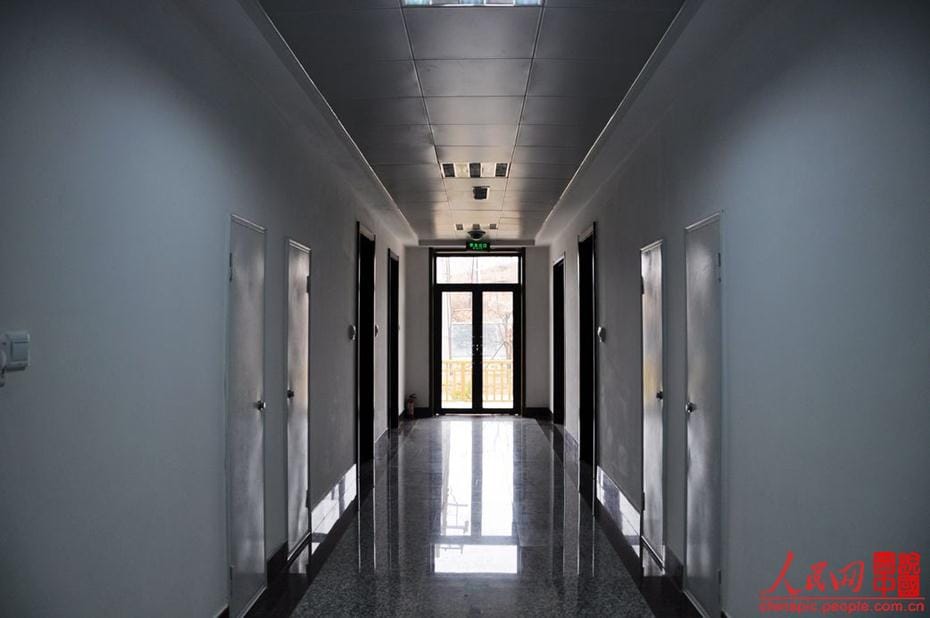
    This is the hallway of the investigation facility.

     
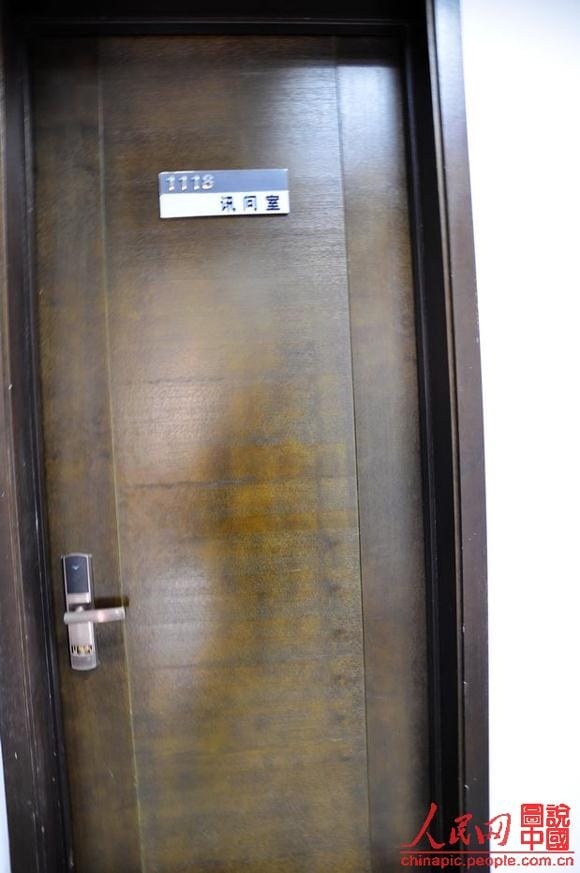
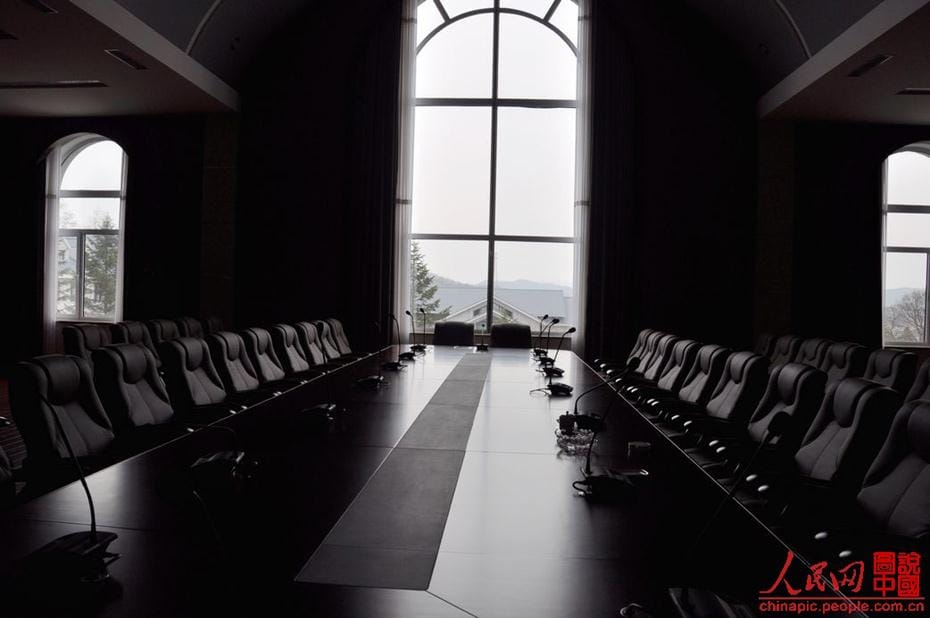
    Behind this door is the interrogation room of the facility, where investigators interrogate corrupt officials. Please note the term “interrogation room.” When a person enters this room, it is evident that the [Party] organization has already obtained conclusive evidence that the person is a corrupt official.

    These are the investigators’ seats in the interrogation room. Note the presence of video cameras.


    The lower podium across [from the investigators’ seats] is the seat for the corrupt official. Regardless of your past brilliance or elevated status, once you are invited to this place, your height [in the lower podium] is the same.


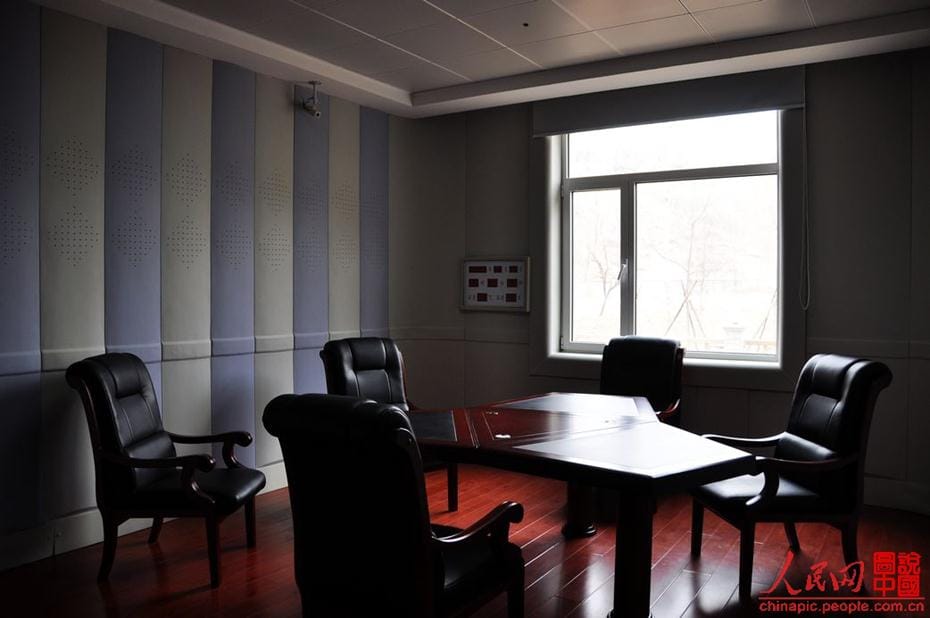
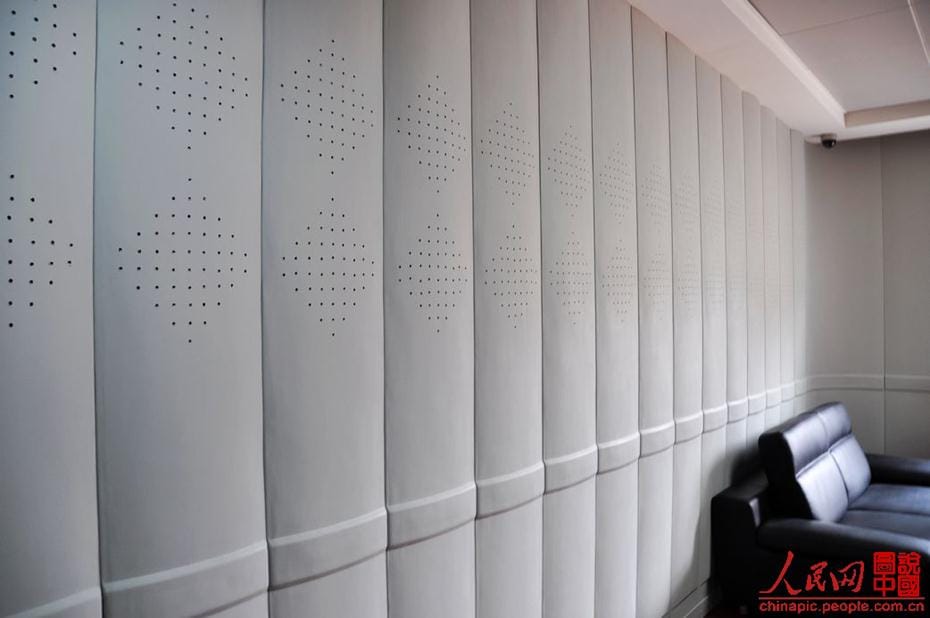
    The walls are made of special materials. They are soft to touch, soundproof, and prevent accidents.


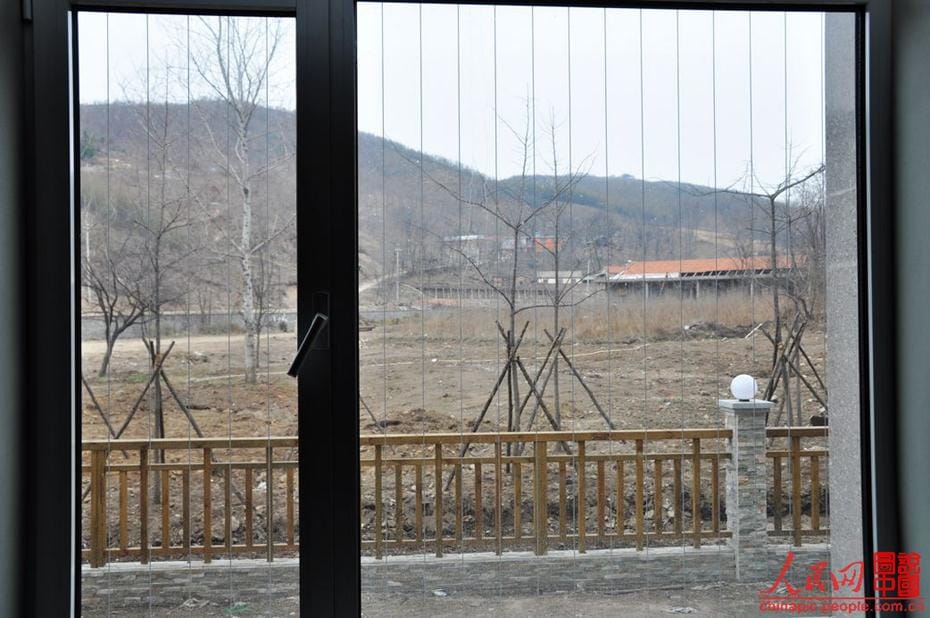
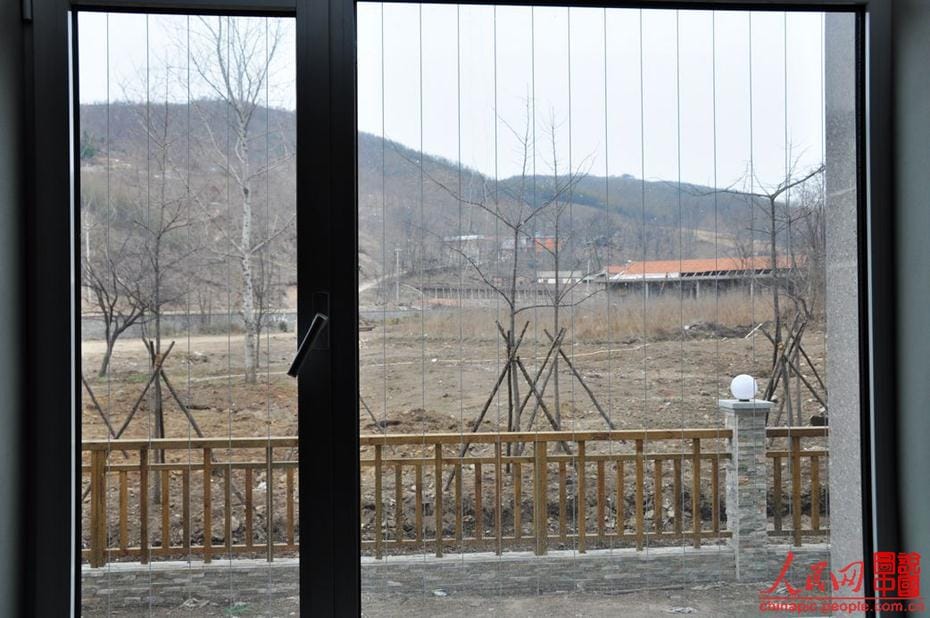
    Protective fences are installed on the windows. Outside, there are only mountains, remote and uninhabited, leaving one with a desolate feeling. 

     
    The Central Committee for Discipline Inspection’s shuanggui system makes all problem officials tremble with fear. It is also known as “the sharp sword for punishing corrupt officials.”
     

    This is the inquiry room, which is substantially different from the interrogation room.

     
    The inquiry room also has installed a series of equipment [capable of performing] synchronous audio recording, synchronous video recording, synchronous broadcast, and synchronous backup [so that] the entire process of investigation and inquiry is simultaneously supervised. Note the arrangement of the table and chairs, which differs from that of the interrogation room.
     

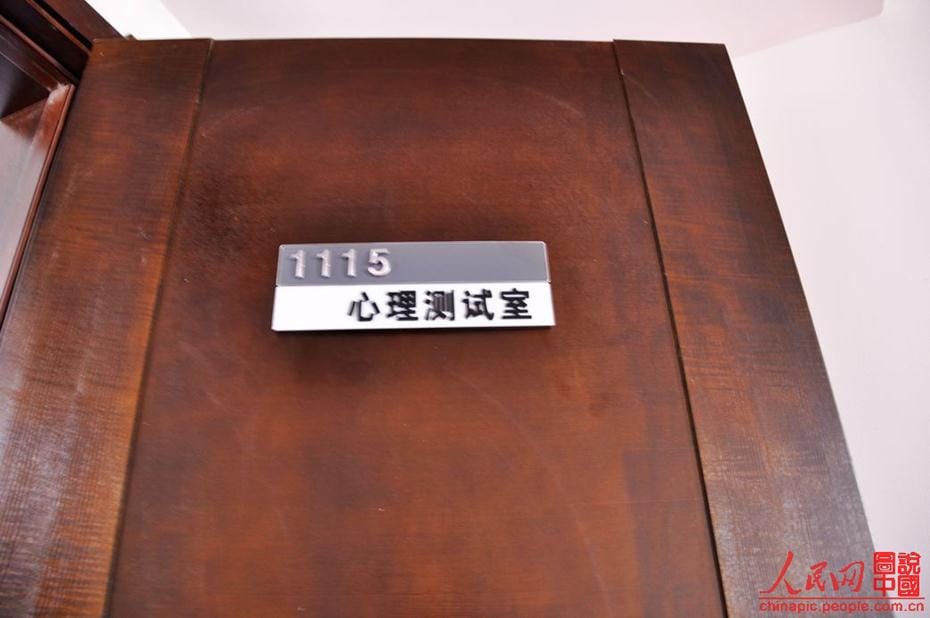
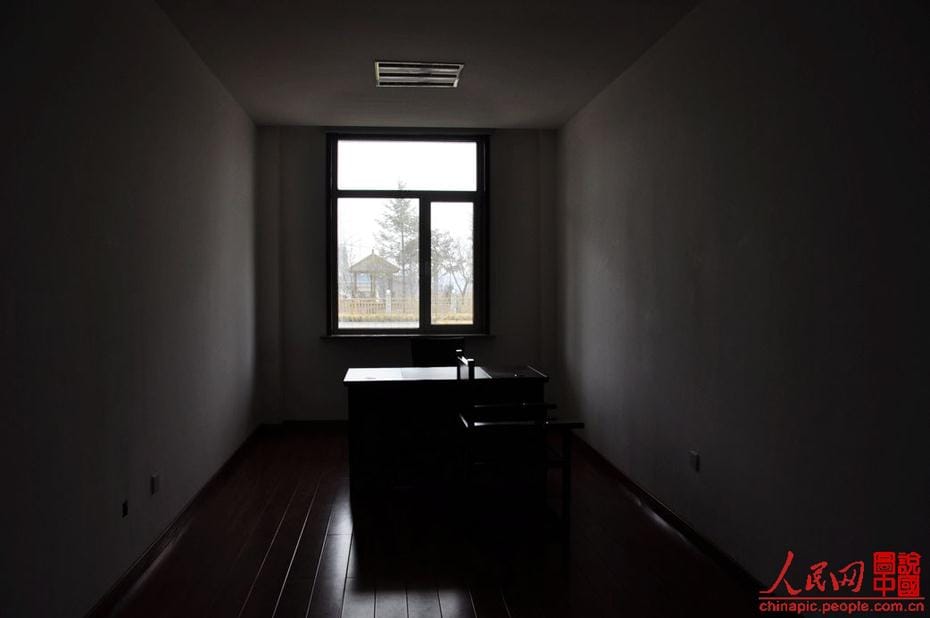
    This is the psychological examination room.


    The psychological examination room has many advanced instruments. Lies are immediately detected. [The instruments] are very sensitive.

     
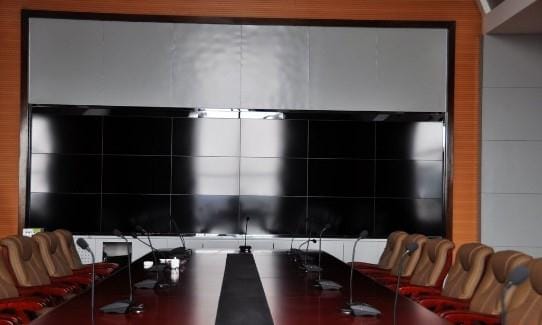
    [This is the] investigations command room.
    I am especially fascinated by this big monitor, which I had only heard of but never seen before. This is the investigations command room’s monitor of the investigation status in every room. Using [a big monitor to provide] a clear picture at a glance is very appropriate.
    I heard that all corrupt officials who are summoned to the investigation facility have their contemptuous behavior exposed. Living under shuanggui is what they fear most. Within three days, they will confess.
    Due to special reasons, some photographs and descriptions have been left out. [Here is] a warning for government officials to bear in mind: The power in your hands is given by the people for seeking the benefit of the people. Do not betray the people’s trust. Be a good official with both competence and integrity. Do not be invited here. If you come here, your days will seem like years. There is no rank before the law.
  • Official Fear: Inside a Shuanggui Investigation Facility

    Official Fear: Inside a Shuanggui Investigation Facility

    There is a strong sense among many Chinese that corrupt officials must die. Recently, there were reports of public cheering for the death sentences of the deputy mayors of Suzhou and Hangzhou, and the executions of the head of the State Food and Drug Administration and the director of the Chongqing Municipal Justice Bureau. News of the number of corrupt high officials spared the death penalty also garnered much attention. 

    Translated below, a recent post by Chinese blogger Chu Zhaoxian (储昭贤) reveals a lesser-known, and arguably equally ruthless, tactic primarily used for dealing with Party members accused of corruption: shuanggui (双规). People facing shuanggui, which can be translated as “dual designation” and refers to a designated time and place of inquiry, are usually apprehended at their places of work or summoned for “voluntary visits” with investigators. They are then held in an undisclosed location, often a specially designed hotel or office building. There have been reports of psychological manipulation and physical torture during detention and interrogation, such as sleep deprivation, simulated drowning, burning the detainee’s skin with cigarettes, and beating. Since shuanggui is rooted in Party regulations instead of formal legislation, it is a form of extra-legal detention. Because such regulations lack the transparency afforded by a legal system, the extent to which human rights violations are committed during shuanggui is not well documented.

    Despite its susceptibility to human rights violations, shuanggui gained the unashamed support of Chu, who assumes the same disposition of his readers. In the post, Chu describes his rare visit to a shuanggui investigation facility. The circumstances that led to the visit are unexplained; however, the trip does result in the publication of what Dui Hua believes to be the first photographic exposé of the inside of a shuanggui investigation facility. 

    Throughout his cold description of the rooms and instruments used for detention and interrogation, Chu drops menacing words of caution for the corrupt. He states that corrupt officials tremble with fear at the mention of shuanggui and do not make it three days before confessing. Chu ends the post with another warning: “Do not be invited here. If you come here, your days will seem like years. There is no rank before the law.” 

    Chu may be correct that “days will seem like years.” Shuanggui usually lasts several months and can extend to more than one year. Some shuanggui cases, particularly high-profile ones, are converted into criminal cases and adjudicated through the formal judicial process. The typical sentence is death or life imprisonment, with all property confiscated and official positions revoked. The following table summarizes some recent cases:

    Name

    Position held prior to shuanggui

    Alleged offenses

    Start of shuanggui

    Criminal sentence, date of sentence
    Chen Shaoji Chairman, Chinese People’s Political Consultative Conference, Guangdong Province Accepting bribes, embezzlement Apr 2009 Death sentence, suspended two years, Jul 2010
    Huang Yao Chairperson, Chinese People’s Political Consultative Conference, Guizhou Province Accepting bribes, facilitating an illegal mining enterprise Oct 2009 Death sentence, suspended two years, Dec 2010
    Kang Rixin Party Secretary and General Manager, China National Nuclear Corporation; former member, Committee for Discipline Inspection Accepting bribes, embezzling shareholder equity Aug 2009 Life imprisonment, Nov 2010
    Li Tangtang Vice Chairman, Ningxia Hui Autonomous Region Accepting bribes Oct 2010 Life imprisonment, Apr 2011
    Liu Zhijun Party Secretary, National Railway Ministry “Severe violations of discipline,” manipulating competitive bidding Feb 2011 Pending
    Lü Jiangbo Village Director, Keren Village, Jinjiang City, Fujian Province “Obstructing official business” (organizing village protests of land seizure) Feb 2010 11 years’ imprisonment, Oct 2010
    Pi Qiansheng Director, Special Economic Zone, Tianjin Municipality Illegal receipt of property, “seeking and facilitating benefits for others” Jun 2009 Death sentence, suspended two years, Dec 2010
    Song Yong Deputy Director, Liaoning Provincial People’s Congress Accepting bribes, embezzlement Oct 2009 Death sentence, suspended two years, Jan 2011
    Wang Huayuan Member, Party Committee for Discipline Inspection, Zhejiang Province Accepting bribes Apr 2009 Death sentence, suspended two years, Sep 2010
    Xu Zhongheng Mayor, Shenzhen Accepting bribes Jun 2009 Death sentence, suspended two years, May 2011
    Zhang Meifang Deputy Director, Department of Finance, Jiangsu Province Accepting bribes Nov 2010 Pending
    Zheng Shaodong Assistant Department Head, Ministry of Public Security; member, Party Committee Accepting bribes Jan 2009 Death sentence, suspended two years, Sep 2010
    Zhu Zhigang Director, Commission for Budget Affairs of the Standing Committee of the National People’s Congress Accepting bribes, abusing position to advantage others financially, manipulating real estate prices Oct 2008 Life imprisonment, May 2010


    Despite possible human rights abuses, or perhaps because of them, shuanggui is likely to remain a common anti-corruption measure for years to come. As the number of officials found guilty of corruption rises, it stands to reason that shuanggui, which can often be a path to harsh criminal sentences, would have some popular support. (As an indication of interest, Chu’s article spread virally with numerous re-postings by various blogs and news media.) Two reasons likely contribute to such support. First, shuanggui detainees are commonly accused of unpopular acts of corruption and graft. Second, shuanggui is almost exclusively used against Party members, who are part of an elevated socioeconomic group that comprises only 6 percent of Chinese citizens.

    Sadly, acceptance of shuanggui seems to have seeped into international human rights circles and resulted in a dearth of relevant research and advocacy. While stamping out corruption is a worthy cause, it by no means warrants extra-legal detention, torture, or lack of transparency and rule of law.

    Endnote: Days after publication, Chu’s article was deleted along with all but one of its re-postings. The remaining post contained none of the original photos and has since been deleted.


    *


    Where Corrupt Officials Fear Most: Exploring a Shuanggui Investigation Facility
    Chu Zhaoxian
    April 28, 2011

    A popular saying among Chinese government officials goes: “Fear not the heavens or the earth, but fear the summons of the Central Commission for Discipline Inspection’s Anti-Corruption Office.”

    I had a rare opportunity to visit a shuanggui anti-corruption investigation facility. There was no advance notice that I would be brought to this place. When the car reached the highway exit of another city, a police car appeared in front of us and led the way. We were driven through rugged and muddy mountain roads, until we were well within remote mountains. Getting out of the car, I looked around and saw nothing but the desolate mountains. We entered an ordinary-looking courtyard and stopped before a small building, where People’s Armed Police were standing guard.

    On the other side, a leader led us into the building and through the security check machines. Not until we passed the security check could we start to move about normally.

    Shuanggui stems from Article 28, Section 3 of the Investigations Regulations of the Ministry of Supervision of the Communist Party of China, which “demands a person relevant to a case to appear at a designated time and place to provide explanations regarding all aspects of the case.”

    This is the hallway of the investigation facility.


    Behind this door is the interrogation room of the facility, where investigators interrogate corrupt officials. Please note the term “interrogation room.” When a person enters this room, it is evident that the [Party] organization has already obtained conclusive evidence that the person is a corrupt official.

    These are the investigators’ seats in the interrogation room. Note the presence of video cameras.


    The lower podium across [from the investigators’ seats] is the seat for the corrupt official. Regardless of your past brilliance or elevated status, once you are invited to this place, your height [in the lower podium] is the same.


    The walls are made of special materials. They are soft to touch, soundproof, and prevent accidents.


    Protective fences are installed on the windows. Outside, there are only mountains, remote and uninhabited, leaving one with a desolate feeling. 


    The Central Committee for Discipline Inspection’s shuanggui system makes all problem officials tremble with fear. It is also known as “the sharp sword for punishing corrupt officials.”

    This is the inquiry room, which is substantially different from the interrogation room.


    The inquiry room also has installed a series of equipment [capable of performing] synchronous audio recording, synchronous video recording, synchronous broadcast, and synchronous backup [so that] the entire process of investigation and inquiry is simultaneously supervised. Note the arrangement of the table and chairs, which differs from that of the interrogation room.

    This is the psychological examination room.


    The psychological examination room has many advanced instruments. Lies are immediately detected. [The instruments] are very sensitive.


    [This is the] investigations command room.

    I am especially fascinated by this big monitor, which I had only heard of but never seen before. This is the investigations command room’s monitor of the investigation status in every room. Using [a big monitor to provide] a clear picture at a glance is very appropriate. 
    I heard that all corrupt officials who are summoned to the investigation facility have their contemptuous behavior exposed. Living under shuanggui is what they fear most. Within three days, they will confess. 
    Due to special reasons, some photographs and descriptions have been left out. [Here is] a warning for government officials to bear in mind: The power in your hands is given by the people for seeking the benefit of the people. Do not betray the people’s trust. Be a good official with both competence and integrity. Do not be invited here. If you come here, your days will seem like years. There is no rank before the law.