Tag: acquittal

  • China’s 2022 Acquittal Rate Lowest in Two Decades

    China’s 2022 Acquittal Rate Lowest in Two Decades

    A 2021 trial for a murder case, which was livestreamed on China Court Trial Online. Image credit: Kaifeng Intermediate People’s Court, Henan Province
    Acquittal rates in China have always been low, but in 2022 the number decreased to a record low. According to the most recent China Law Yearbook, an annual official compendium released in 2023 that covers 2022, only 631 individuals (0.044 percent of the 1,431,585 defendants with effective judgments) were found not guilty by criminal courts in 2022.
    The conviction rate in 2022 was 99.95 percent, a record high according to statistics in the China Law Yearbook. The acquittal rates dropped every year in the decade after 2003. The most dramatic decrease happened in 2005, when the 0.256 percent acquittal rate was less than half of 2003’s already low 0.647 percent. In 2010, the acquittal rate fell below 0.1 percent for the first time and has never returned above this level.
    Table 1.
    Source: China Law Yearbooks, 2004-2023
    When Xi Jinping began his first term as Chinese president in 2013, many legal practitioners expressed optimism that acquittal rates would approach more “normal” levels as a result of proposed legal reforms aimed to strengthen procedural justice. Although what constitutes a “normal” acquittal level is not clearly defined, a five percent rate is often cited when the topic is discussed in China. Chinese legal authorities also overturned a series of high-profile convictions and took steps to strengthen measures to exclude confessions extracted through torture and other illegal evidence.
    For 2013, the acquittal rate rose briefly for the first time since 2003, growing annually from six acquittals per 10,000 adjudications to seven. The rates remained steady, climbing at a slow pace until 2018 when they dropped again to 0.057 percent, a 37 percent decrease compared to the previous year.
    Table 2.
    Source: China Law Yearbooks, 2004-2023
    Xi has spearheaded an effort to hold judges, prosecutors, and police officers accountable for wrongful convictions in cases that have since been retried. In 2021, the Supreme People’s Procuratorate investigated all of the 246 criminal cases that were re-tried and corrected since 2018 and found that in 22 of these cases, people had been wrongly jailed for more than 10 years. More than 500 prosecutors were punished, some of whom had already retired.
    The acquittal rate saw a brief rise to 0.084 percent in 2019. However, this reversal was short-lived. In the three years that followed, the rates have again dropped, to 0.068 percent in 2020, 0.052 percent in 2021, and then to 0.044 percent in 2022.
    Acquittals are even rarer in trials of endangering state security (ESS) crimes, which include subversion, inciting subversion, splittism, inciting splittism, obtaining or providing state secrets, and espionage.  From 2013-2016, only ten people were acquitted, according to statistics released by the Supreme People’s Court. The names and other details of these ten individuals are not known. Dui Hua is not aware of any acquittals for ESS crimes after 2016.
    Table 3. ESS acquittals (effective judgments), 2013-2016
    YearNo. of Acquittals of ESS Crimes
    20132
    20142
    20150
    20166
    Source: Records of People’s Courts Historical Judicial Statistics, Criminal Trials Vol. 6, 2013-2016
    In a Human Rights Journal published in 2015, Dui Hua reported that the number of not-guilty judgments is influenced by efforts to avoid the payment of state compensation, marginalize defense attorneys, restrict judicial independence, and maintain stability. Some of these issues have continued, according to a 2022 legal journal re-posted by Shanghquan Law Firm. Additionally, judges realize that acquittals can adversely impact professional assessments for prosecutors because successful convictions are seen as a means for career advancement. There remains an unspoken rule that prosecutors can withdraw indictments and collaborate with judges to eliminate the possibility of non-guilty judgments or to hand out lighter punishments in cases where evidence against the accused is weak.
    One of the fundamental purposes of a criminal justice system is to protect innocent people from being convicted of crimes they did not commit. Despite efforts to overturn high-profile wrongful convictions, these instances likely represent a fraction of cases where defendants are wrongly charged with crimes. The persistently low acquittal rates over the years raise questions about how many more people are incarcerated for crimes they did not commit. A court which exercises its authority to acquit in accordance with the law ensures systemic justice and procedural fairness; it is fundamentally different from relying on political whims to right past wrongs. As Xi rejects the notion of judicial independence, continues his crackdown on defense lawyers, and places state security and stability maintenance above all else, there is little in place to stop the near-guaranteed high conviction rate from continuing for the foreseeable future.

    Download: China Acquittals, 2003-2022 (Excel). Source: China Law Yearbook, compiled by Dui Hua.

  • Behind the Rarity of China's Acquittals

    Image credit: 163.com

    Acquittals are rare in China. The most recent China Law Yearbook, an official compendium, states that for every 10,000 people tried in criminal courts in 2013, just seven were acquitted. Although the number of people found not guilty rose incrementally in 2013, it plummeted from 6,617 to 727 per year between 2000 and 2012. Meanwhile the number of people whose cases were adjudicated trended upward, causing acquittals to account for just 0.07 percent of completed trials in 2013, falling from 1.02 percent in 2000. In comparison to China, Japan and Russia acquit less than 1 percent of defendants, while the Department of Justice reports that since 2001, the United States has convicted more than 90 percent of defendants each year.

    Adjudications and acquittals for defendants in criminal trials, 2000-2013
    YearAdjudicationsAcquittals% Acquitted
    2000648725*66171.02
    2001740000*65970.89
    200270670749350.70
    200374709648350.65
    200476795122920.30
    200584471721620.26
    200689075517130.19
    200793315614170.15
    2008100867713730.14
    200999787212060.12
    201010074199990.10
    201110516388910.08
    201211741337270.06
    201311586098250.07
    * Dui Hua estimates
    Sources: Dui Hua, China Law Yearbook

    China Law Yearbook does not typically disaggregate acquittal data by crime, but in select years it has provided the number of people found not guilty in trials for endangering state security (ESS) and dereliction of military duty. (Dui Hua research indicates that ESS accounts for the vast majority of cases when these two crime categories are combined.) In 2002, only one of the 366 people tried in these types of cases was acquitted, while in 2004, there were five in 336. None of the 730 individuals tried for ESS with records in Dui Hua’s Political Prisoner Database was found not guilty.

    Indirectly addressing the paucity of acquittals as part of judicial reform efforts, the Central Politico-Legal Committee (PLC) announced its decision on January 20, 2015, to remove indictment and conviction rates from the list of performance indicators applied to judicial officials. While this should reduce pressure to convict, the number of not-guilty verdicts will continue to be influenced by efforts to avoid the payment of state compensation, marginalize defense attorneys, restrict judicial independence, and maintain stability, among others.

    Procuratorates

    Chinese prosecutors tend to explain low acquittal rates as an indicator of good work. In 2012, a Beijing prosecutor told Legal Daily that a high level of “judicial precision” allowed good prosecutors to “filter out” cases likely to result in acquittal so that the majority of people standing trial were “guilty.” A Guangdong High People’s Court judge reiterated this sentiment by telling the paper that, “The reduction in acquittals, to a very large extent, is a manifestation of increasing awareness about evidence and law in our investigative and prosecutorial units.”

    For prosecutors, acquittals signify failure to demonstrate guilt, and at least prior to the implementation of the PLC decision, they have a direct negative impact on performance evaluations. In 2005, the Supreme People’s Procuratorate (SPP) issued evaluation measures stating that acquittal rates should not exceed 0.2 percent. Local procuratorates followed suit by putting forth “zero acquittals” as the ultimate goal in their annual work reports. Among various performance indicators, the acquittal rate was the most important, legal scholar Yuan Yicheng told Legal Daily in 2012.

    Rather than risk acquittal, it is an unspoken rule that prosecutors decide to withdraw indictments. The procuratorate may formally drop the charges against a criminal suspect or remand a case for supplementary investigation, both with the approval of the court. If additional investigation is conducted, a suspect may be unable to fully regain their personal freedom during that time. By deciding not to pursue charges, prosecutors not only reduce acquittals but also dodge legal repercussions, since people without not-guilty verdicts face barriers to filing complaints against or winning compensation from government bureaus that wrongfully deprive them of their personal freedom.

    Called a “black-box operation” by Xiaoxiang Morning Post, indictment withdrawals are not covered by the Criminal Procedure Law. Instead they are outlined in judicial interpretations and opinions issued by the SPP and Supreme People’s Court (SPC). After conducting a study on the use of the practice between 2003 and 2005, the SPP reported finding numerous problems, according to legal scholar Gao Tong. These problems included prosecutors opting to withdraw indictments in instances where they feared the defendant would be found not guilty and laxity in carrying out legal oversight. The SPP’s 2005 evaluation measures state that decisions not to pursue charges should occur in less than 0.8 percent of cases, four times the target for acquittals.

    Indictment withdrawals are not uncommon in political cases. In Gansu, Chen Pingfu (陈平福) was placed under residential surveillance in June 2012 for writing dozens of blog posts about the social injustices he experienced as a laid-off teacher, petitioner, and street performer. Chen was formally arrested for inciting subversion in August, but following an outpouring of public support for his release, his indictment was withdrawn on December 14, 2012. Chen’s defense lawyer claimed that he never saw the prosecutors’ application for withdrawal and was not informed of the basis for withdrawing the indictment. In a separate case, the Beijing People’s Procuratorate decided not to pursue charges against Wang Gongquan (王功权) on January 21, 2015. The prominent businessman was a cofounder, along with Xu Zhiyong (许志永), of the New Citizens’ Movement, which advocates for education for migrant children and transparency in the assets of government officials. The withdrawal followed a televised confession Wang made in December 2013 and his release on bail in January 2014.

    Courts

    Prosecutors issue indictments, but it is the courts that hand down convictions. Because convictions are the primary basis upon which their promotions are decided, “prosecutors need to run daily to the courts to beg [judges] not to hand down acquittals,” according to a mid-ranking prosecutor cited in an article published in Contemporary Law Review by legal scholar Zhu Tonghui. Painting a picture of insufficient checks and balances within the judiciary, Zhu notes that judges tend to approve most indictment withdrawals in part because they are aware of the adverse impact acquittals have on prosecutors. Courts and procuratorates tend to work together to rule out the possibility of not-guilty verdicts, according to an article published in the Journal of Hubei Correspondence University in 2014.

    Like prosecutors, judges see convictions as a means to career advancement, but they also see them as tools for maintaining stability. Judges worry that finding defendants not guilty causes an uptick in petitioning because victims’ family members may feel that the judiciary failed to deliver justice and punish the real culprits, the SPC Research Office wrote in 2014. Acquittals in appellate trials are equally undesirable because higher-level courts do not want the public to view lower-court verdicts as “wrongful,” said Yuan Yicheng. Gao Tong says that acquittals often spark fierce public sentiments, where judges are denounced as “corrupt” or “abusing power.”

    Some legal experts believe that courts reconcile unfounded guilty verdicts by issuing light or suspended sentences or exempting defendants from criminal punishment. China Law Yearbook shows that the percentage of convicted persons who were exempt from criminal punishment remained relatively stable around 1.67 percent from 2003 through 2013, however, the number of people receiving suspended sentences increased annually, going from 18.47 percent in 2003 to 30.78 percent in 2013. Critics argue that a portion of these exemptions and suspensions represent people who should have been acquitted.

    Defense lawyers

    Within the Chinese criminal justice system, defendants have little support. In 2012, former All China Lawyers Association president Yu Ning publicly stated that defense lawyers participated in fewer than 30 percent of all criminal cases nationwide with participation as low as 12 percent in some provinces. Defense lawyers face political and professional retaliation for performing their duties, and are often barred from routine activities such as meeting with their clients and obtaining case documents from police, prosecutors, and judges. The challenges facing defense lawyers are widely documented.

    Stability maintenance

    The decision of guilt or innocence is beyond the courts when the PLC intervenes in cases deemed to have far-reaching consequences for social or political stability. In these “stability maintenance” interventions, the PLC encourages coordination between courts, procuratorates, and police. China Youth Daily reported on this type of intervention in January 2014. In this instance, the local PLC in Gushi County, Henan Province, issued a “red-head document” requesting that the county court convict Wu Yunqiang (吴运强) on the grounds that an acquittal would lead to “negative social consequences” and “render local land-administration regulations useless.” The county accused Wu of illegal land use in early 2009 after he sold his kindergarten in Zhongshan, Guangdong Province. Wu was convicted and given a suspended sentence in November 2011, but two years later the Xinyang Intermediate People’s Court overturned the verdict and ordered a retrial due to insufficient evidence. The procuratorate then formally withdrew the indictment in December 2013. However, due in large part to PLC intervention, Wu was re-indicted. In October 2014 he was sentenced to three years in prison for illegal transfer of land-use rights despite the fact that the procuratorate reportedly failed to present new evidence to substantiate his guilt.

    Policies to manipulate verdicts based upon their social and political outcome undermine judicial independence and justice itself. During a speech at the National Prosecutors’ College in August 2014, SPP Procurator-General Cao Jianming acknowledged the prevention of wrongful convictions as the biggest challenge for prosecutors and urged judicial officials to hold on to the presumption of innocence. Coordinated or not, as wrongful convictions continue to be exposed by Chinese news media, it is increasingly difficult to view China’s acquittal rate as simply good work.
  • Behind the Rarity of China's Acquittals

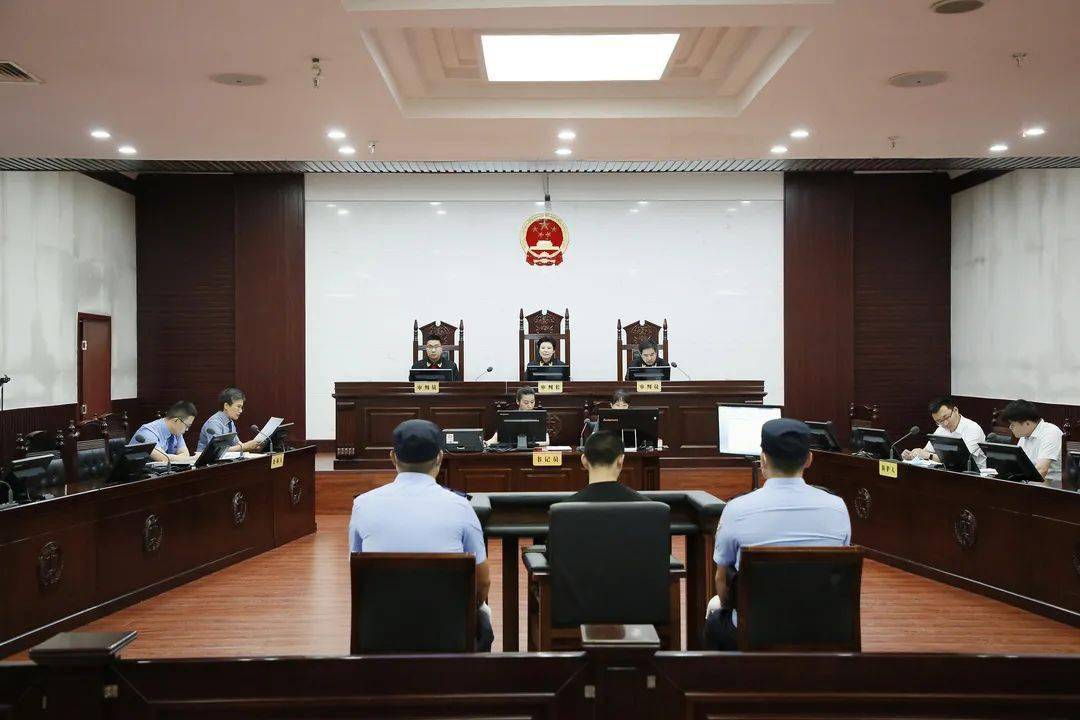
    Image credit: 163.com

    Acquittals are rare in China. The most recent China Law Yearbook, an official compendium, states that for every 10,000 people tried in criminal courts in 2013, just seven were acquitted. Although the number of people found not guilty rose incrementally in 2013, it plummeted from 6,617 to 727 per year between 2000 and 2012. Meanwhile the number of people whose cases were adjudicated trended upward, causing acquittals to account for just 0.07 percent of completed trials in 2013, falling from 1.02 percent in 2000. In comparison to China, Japan and Russia acquit less than 1 percent of defendants, while the Department of Justice reports that since 2001, the United States has convicted more than 90 percent of defendants each year.

    Adjudications and acquittals for defendants in criminal trials, 2000-2013
    YearAdjudicationsAcquittals% Acquitted
    2000648725*66171.02
    2001740000*65970.89
    200270670749350.70
    200374709648350.65
    200476795122920.30
    200584471721620.26
    200689075517130.19
    200793315614170.15
    2008100867713730.14
    200999787212060.12
    201010074199990.10
    201110516388910.08
    201211741337270.06
    201311586098250.07
    * Dui Hua estimates
    Sources: Dui Hua, China Law Yearbook

    China Law Yearbook does not typically disaggregate acquittal data by crime, but in select years it has provided the number of people found not guilty in trials for endangering state security (ESS) and dereliction of military duty. (Dui Hua research indicates that ESS accounts for the vast majority of cases when these two crime categories are combined.) In 2002, only one of the 366 people tried in these types of cases was acquitted, while in 2004, there were five in 336. None of the 730 individuals tried for ESS with records in Dui Hua’s Political Prisoner Database was found not guilty.

    Indirectly addressing the paucity of acquittals as part of judicial reform efforts, the Central Politico-Legal Committee (PLC) announced its decision on January 20, 2015, to remove indictment and conviction rates from the list of performance indicators applied to judicial officials. While this should reduce pressure to convict, the number of not-guilty verdicts will continue to be influenced by efforts to avoid the payment of state compensation, marginalize defense attorneys, restrict judicial independence, and maintain stability, among others.

    Procuratorates

    Chinese prosecutors tend to explain low acquittal rates as an indicator of good work. In 2012, a Beijing prosecutor told Legal Daily that a high level of “judicial precision” allowed good prosecutors to “filter out” cases likely to result in acquittal so that the majority of people standing trial were “guilty.” A Guangdong High People’s Court judge reiterated this sentiment by telling the paper that, “The reduction in acquittals, to a very large extent, is a manifestation of increasing awareness about evidence and law in our investigative and prosecutorial units.”

    For prosecutors, acquittals signify failure to demonstrate guilt, and at least prior to the implementation of the PLC decision, they have a direct negative impact on performance evaluations. In 2005, the Supreme People’s Procuratorate (SPP) issued evaluation measures stating that acquittal rates should not exceed 0.2 percent. Local procuratorates followed suit by putting forth “zero acquittals” as the ultimate goal in their annual work reports. Among various performance indicators, the acquittal rate was the most important, legal scholar Yuan Yicheng told Legal Daily in 2012.

    Rather than risk acquittal, it is an unspoken rule that prosecutors decide to withdraw indictments. The procuratorate may formally drop the charges against a criminal suspect or remand a case for supplementary investigation, both with the approval of the court. If additional investigation is conducted, a suspect may be unable to fully regain their personal freedom during that time. By deciding not to pursue charges, prosecutors not only reduce acquittals but also dodge legal repercussions, since people without not-guilty verdicts face barriers to filing complaints against or winning compensation from government bureaus that wrongfully deprive them of their personal freedom.

    Called a “black-box operation” by Xiaoxiang Morning Post, indictment withdrawals are not covered by the Criminal Procedure Law. Instead they are outlined in judicial interpretations and opinions issued by the SPP and Supreme People’s Court (SPC). After conducting a study on the use of the practice between 2003 and 2005, the SPP reported finding numerous problems, according to legal scholar Gao Tong. These problems included prosecutors opting to withdraw indictments in instances where they feared the defendant would be found not guilty and laxity in carrying out legal oversight. The SPP’s 2005 evaluation measures state that decisions not to pursue charges should occur in less than 0.8 percent of cases, four times the target for acquittals.

    Indictment withdrawals are not uncommon in political cases. In Gansu, Chen Pingfu (陈平福) was placed under residential surveillance in June 2012 for writing dozens of blog posts about the social injustices he experienced as a laid-off teacher, petitioner, and street performer. Chen was formally arrested for inciting subversion in August, but following an outpouring of public support for his release, his indictment was withdrawn on December 14, 2012. Chen’s defense lawyer claimed that he never saw the prosecutors’ application for withdrawal and was not informed of the basis for withdrawing the indictment. In a separate case, the Beijing People’s Procuratorate decided not to pursue charges against Wang Gongquan (王功权) on January 21, 2015. The prominent businessman was a cofounder, along with Xu Zhiyong (许志永), of the New Citizens’ Movement, which advocates for education for migrant children and transparency in the assets of government officials. The withdrawal followed a televised confession Wang made in December 2013 and his release on bail in January 2014.

    Courts

    Prosecutors issue indictments, but it is the courts that hand down convictions. Because convictions are the primary basis upon which their promotions are decided, “prosecutors need to run daily to the courts to beg [judges] not to hand down acquittals,” according to a mid-ranking prosecutor cited in an article published in Contemporary Law Review by legal scholar Zhu Tonghui. Painting a picture of insufficient checks and balances within the judiciary, Zhu notes that judges tend to approve most indictment withdrawals in part because they are aware of the adverse impact acquittals have on prosecutors. Courts and procuratorates tend to work together to rule out the possibility of not-guilty verdicts, according to an article published in the Journal of Hubei Correspondence University in 2014.

    Like prosecutors, judges see convictions as a means to career advancement, but they also see them as tools for maintaining stability. Judges worry that finding defendants not guilty causes an uptick in petitioning because victims’ family members may feel that the judiciary failed to deliver justice and punish the real culprits, the SPC Research Office wrote in 2014. Acquittals in appellate trials are equally undesirable because higher-level courts do not want the public to view lower-court verdicts as “wrongful,” said Yuan Yicheng. Gao Tong says that acquittals often spark fierce public sentiments, where judges are denounced as “corrupt” or “abusing power.”

    Some legal experts believe that courts reconcile unfounded guilty verdicts by issuing light or suspended sentences or exempting defendants from criminal punishment. China Law Yearbook shows that the percentage of convicted persons who were exempt from criminal punishment remained relatively stable around 1.67 percent from 2003 through 2013, however, the number of people receiving suspended sentences increased annually, going from 18.47 percent in 2003 to 30.78 percent in 2013. Critics argue that a portion of these exemptions and suspensions represent people who should have been acquitted.

    Defense lawyers

    Within the Chinese criminal justice system, defendants have little support. In 2012, former All China Lawyers Association president Yu Ning publicly stated that defense lawyers participated in fewer than 30 percent of all criminal cases nationwide with participation as low as 12 percent in some provinces. Defense lawyers face political and professional retaliation for performing their duties, and are often barred from routine activities such as meeting with their clients and obtaining case documents from police, prosecutors, and judges. The challenges facing defense lawyers are widely documented.

    Stability maintenance

    The decision of guilt or innocence is beyond the courts when the PLC intervenes in cases deemed to have far-reaching consequences for social or political stability. In these “stability maintenance” interventions, the PLC encourages coordination between courts, procuratorates, and police. China Youth Daily reported on this type of intervention in January 2014. In this instance, the local PLC in Gushi County, Henan Province, issued a “red-head document” requesting that the county court convict Wu Yunqiang (吴运强) on the grounds that an acquittal would lead to “negative social consequences” and “render local land-administration regulations useless.” The county accused Wu of illegal land use in early 2009 after he sold his kindergarten in Zhongshan, Guangdong Province. Wu was convicted and given a suspended sentence in November 2011, but two years later the Xinyang Intermediate People’s Court overturned the verdict and ordered a retrial due to insufficient evidence. The procuratorate then formally withdrew the indictment in December 2013. However, due in large part to PLC intervention, Wu was re-indicted. In October 2014 he was sentenced to three years in prison for illegal transfer of land-use rights despite the fact that the procuratorate reportedly failed to present new evidence to substantiate his guilt.

    Policies to manipulate verdicts based upon their social and political outcome undermine judicial independence and justice itself. During a speech at the National Prosecutors’ College in August 2014, SPP Procurator-General Cao Jianming acknowledged the prevention of wrongful convictions as the biggest challenge for prosecutors and urged judicial officials to hold on to the presumption of innocence. Coordinated or not, as wrongful convictions continue to be exposed by Chinese news media, it is increasingly difficult to view China’s acquittal rate as simply good work.