Dui Hua aims to increase dialogue and exchange on incarcerated women in an effort to promote the Bangkok Rules and to promote better treatment of women who are suspects, defendants, or prisoners.

Sources: Dui Hua; China Statistical Yearbook; APCCA; Carson, E. Ann and Mulako-Wangota, Joseph. Bureau of Justice Statistics. Generated using the Corrections Statistical Analysis Tool (CSAT) – Prisoners at www.bjs.gov. (24-Jun-19); National Bureau of Statistics of China, 2016-2018 (as reported in 2020)
Notes: Chinese prisoner data is as of the end of the year except for 2013 and 2014 data, which are mid-year. To allow for comparison, US prisoner data for each year is year-end data for the previous year. Data for 2016-2018 is rounded to the nearest ten thousand.
| Women in Prison in China | ||
| 2003 | 71,286 | 4.61% |
| 2004 | 75,870 | 4.85% |
| 2005 | 77,279 | 4.96% |
| 2006 | 77,771 | 4.97% |
| 2007 | 78,334 | 5.00% |
| 2008 | 80,951 | 5.09% |
| 2009 | 85,167 | 5.25% |
| 2010 | 90,322 | 5.45% |
| 2011 | 93,051 | 5.67% |
| 2012 | 95,770 | 5.83% |
| 2013 | 100,584 | 5.9% |
| 2014 | 103,766 | 6.3% |
| 2015 | 107,131 | 6.5% |
| 2016 | 110,000 | 6.8% |
| 2017 | 143,000 | 8.4% |
| 2018 | 145,000 | 8.6% |
| Sources: Dui Hua; China Statistical Yearbook 2005 – 2012; APCCA Conference Reports 2013 – 2015; National Bureau of Statistics of China, 2016-2018 (as reported in 2020) | ||
Girls in the Justice System
From October 2020 – April 2021, Dui Hua co-hosted the International Symposium on Girls in Conflict with the Law, an innovative online expert exchange on the unique problems and vulnerabilities girls face in justice systems worldwide. The Symposium events–as well as key research, resources, and information on the panelists–can be viewed online at GirlsJustice.org.
In September 2018, Dui Hua released a translation of “Neglected needs: girls in the criminal justice system” aiming to increase the awareness of the special needs of juvenile girls in conflict with the law in Mandarin speaking region.
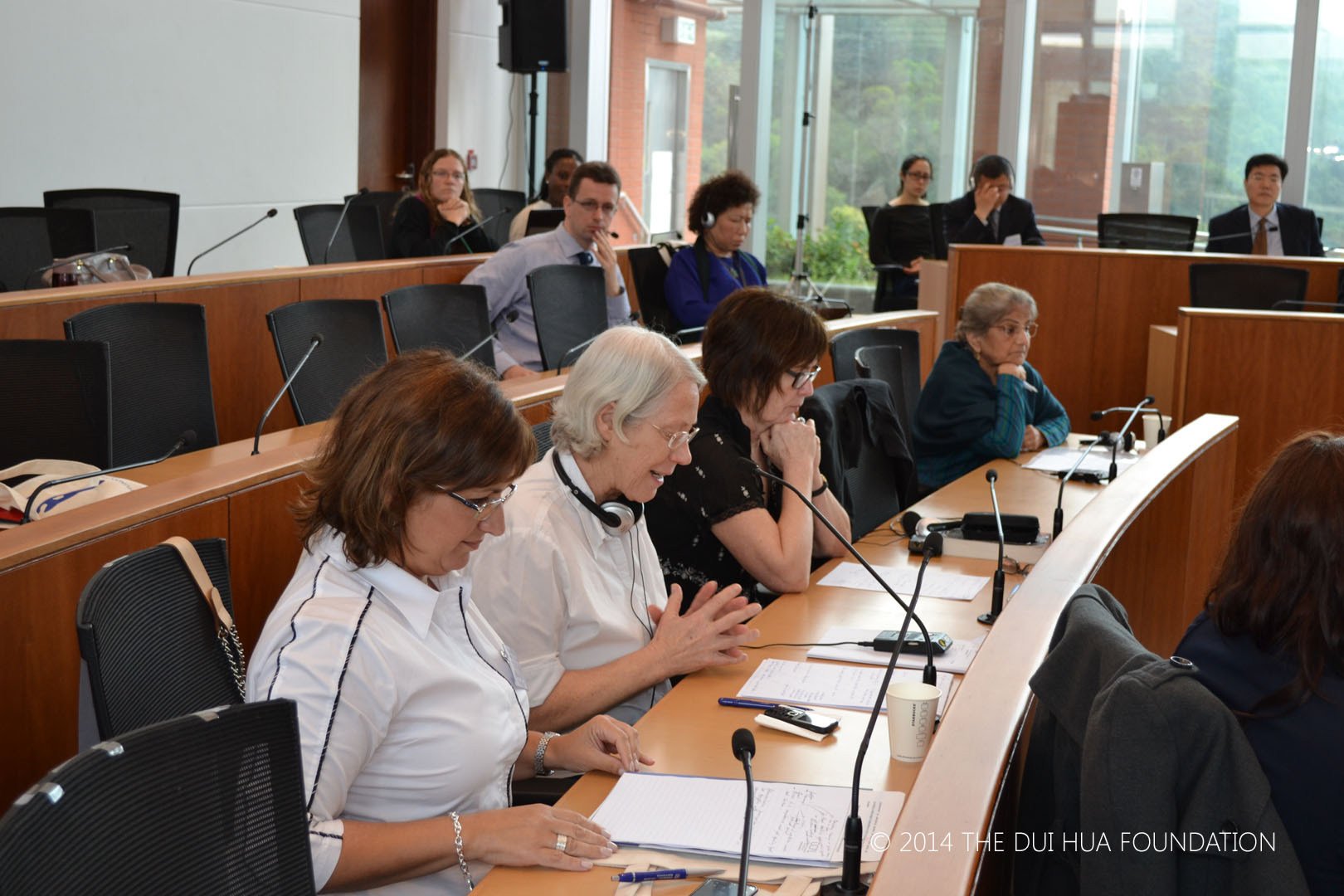
International Symposium on the Bangkok Rules
2014 Women in Prison: An International Symposium on the Bangkok Rules: Dui Hua brought together diverse stakeholders from various criminal justice systems to promote the implementation of the UN Rules for the Treatment of Women Prisoners and Non-Custodial Measures for Women Offenders (the “Bangkok Rules”). Through partnerships with Renmin University, University of Hong Kong, and Penal Reform International, the symposium disseminated original research on women incarcerated in China and around the world.
The Bangkok Rules
In December 2010, the United Nations introduced a framework for gender-specific corrections by passing Rules for the Treatment of Women Prisoners and Non-Custodial Measures for Women Offenders (the Bangkok Rules). Designed to meet the common physical and psychological needs of women in penal systems built for men, these rules form an integral part of women’s rights advocacy. In March 2016, Dui Hua released a Chinese translation of an e-course on sections of the Bangkok Rules regarding non-custodial measures, aiming to increase knowledge of the Rules among key officials.
Selected Articles
Our engagement with China on women in prison involves different forms: direct advocacy, contributions to policy formation through exchanges, and submissions to United Nations mechanisms such as the Bangkok Rules and CEDAW.
Over the years, Dui Hua has advocated for prominent women prisoners including Uyghur businesswoman Rebiya Kadeer, Tibetan nun Ngawang Sangdrol, and most recently Professor Rahile Dawut and retired medical doctor Gulshan Abbas.
We invite you to explore these articles to gain a deeper understanding of the conditions faced by women in detention in China, and the international standards that exist to protect them.