EVENT
Trump and Xi Set to Meet in May
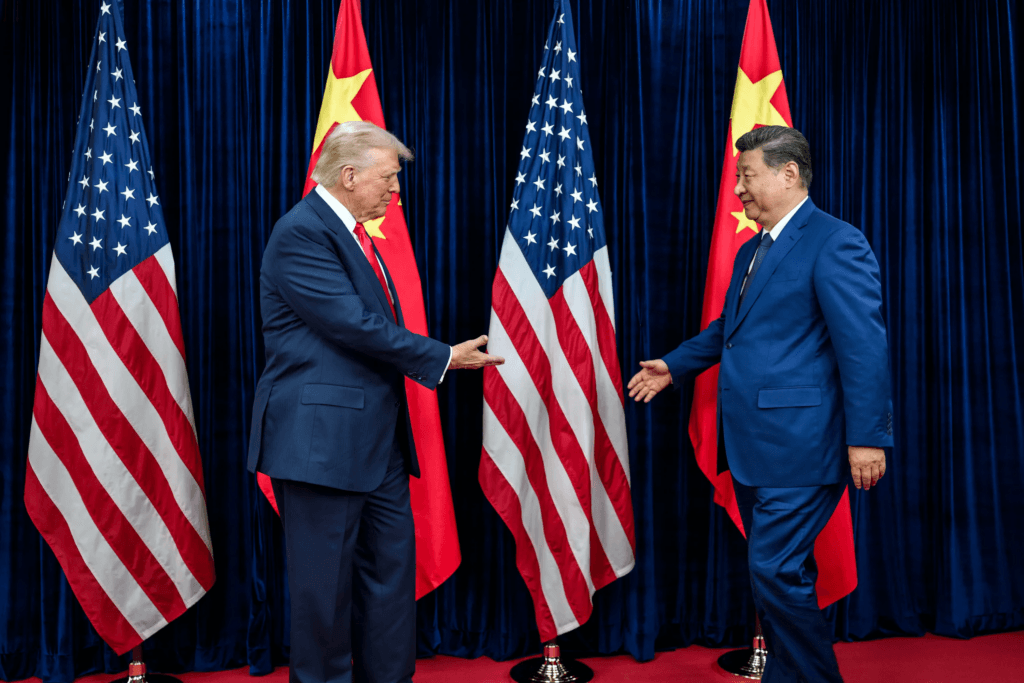
October 30, 2025. Trump and Xi meeting in Busan, South Korea. Image source: Whitehouse
When Donald Trump eventually lands in Beijing in May, he will be the first United States president to set foot in China since his own visit nearly a decade ago. A bruising trade war and rare earths embargo has come and gone; tariffs have yo-yoed to triple digits and back. The two reached a truce last October and have settled cautiously into something resembling a working relationship.
The potential visit, at its core, is a trade summit. Both governments have framed it that way, and the deliverables on offer are modest: an extension on the tariff truce struck in Busan last October, the possible purchase of 500 Boeing aircraft, maybe some commitments on agriculture purchases and a mutual agreement to keep talking. The groundwork has been laid with painstaking efforts. U.S Treasury Secretary Scott Bessent and Chinese Vice Premier He Lifeng have crisscrossed Europe and Asia to keep the relationship functional.
The summit comes at a moment when the architecture of international rules that has governed great-power relations and protected human rights since 1945 is under strain from two directions at once. China has spent years testing its boundaries. The United States, increasingly, is doing the same.
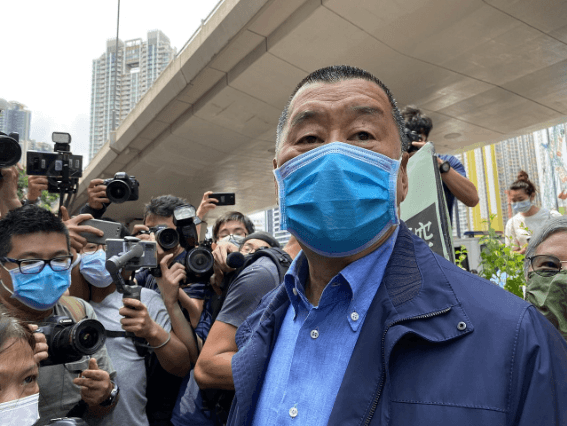
Jimmy Lai in December 2022 after being charged with fraud. Image source: Wikimedia
Nothing illustrates the situation more sharply than the prominent figure of Jimmy Lai. The 78-year-old businessman and former owner of Apple Daily was sentenced to 20 years for alleged collusion with foreign forces and sedition. His life, from stowaway to newspaper magnate to pro-democracy activist, is the biography of a vanished order on which Xi Jinping rose to power and Trump earned his wealth. The verdict is a measure of the degree to which China has, unambiguously, contracted the space around freedom of political and religious expression within its national boundaries over the last decade.
Lai is not the only name human rights advocates hope Mr. Trump will raise. There are several U.S. citizens the State Department has labelled as wrongfully detained. Dawn Michelle Hunt, a Chicago woman, has been imprisoned since 2014 of being involved in a drug scam her family says she was tricked into. Nelson Wells Jr. has languished in a Chinese cell for more than a decade. He maintains his innocence of similar charges that were leveled at Dawn.
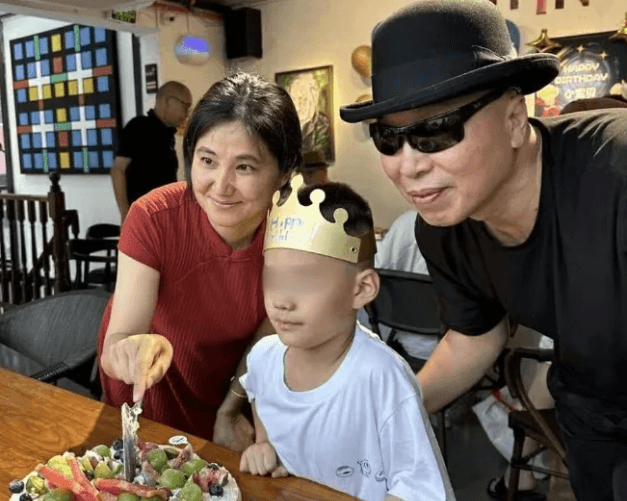
Gao Zhen, Zhao Yaliang, and Gao Jia celebrating Gao Jia’s birthday. Photo provided by Gao family.
There is also the case of Gao Zhen, a New York artist detained for political works he created years before the law criminalizing them existed. His seven-year-old son — an American citizen — has been prevented from returning to his home and school in New York by an exit ban. Also prevented from leaving China is Henry Cai, a businessman who has been there since 2017.
Mr. Trump has on many occasions touted his ability to free Lai. Whether he acts on this claim will say as much about Washington’s convictions as Beijing’s conduct. The United States’ own posture, however, complicates the case. U.S. strikes on Iran and the seizure of former Venezuelan President Nicolas Maduro, have not gone unnoticed in Beijing. China has categorized these acts as instances of Washington operating out of the norms of international rules it helped to create. If his trip to Beijing passes without any public mention of Lai, Hunt, Wells, Gao or Cai, the message will be received clearly in Hong Kong, Tibet, Xinjiang and beyond — human rights are being repriced, trade is the dominant currency of the relationship.
Engagement between the world’s two largest powers is not optional. A China sanctioned Secretary of State Marco Rubio, known for being outspoken against Beijing’s actions in Hong Kong, Tibet and Xinjiang, is said to be accompanying Mr.Trump. The question is what a leader of the free world does while he is there — and what he is willing to do in a room where avoiding the thorny issue of human rights appears to be an easier choice.
Lai is no longer waiting for the superpowers to act. While he won an appeal against a separate fraud case, he has chosen not to appeal the National Security conviction. Lai has chosen to give his final verdict on a world that is trading away human rights – whatever the cost.
PUBLICATIONS HIGHLIGHTS
JOHN KAMM REMEMBERS
From John Kamm Remembers, a series written by Dui Hua’s founder recounting his advocacy for prisoners in China.
A Single Spark
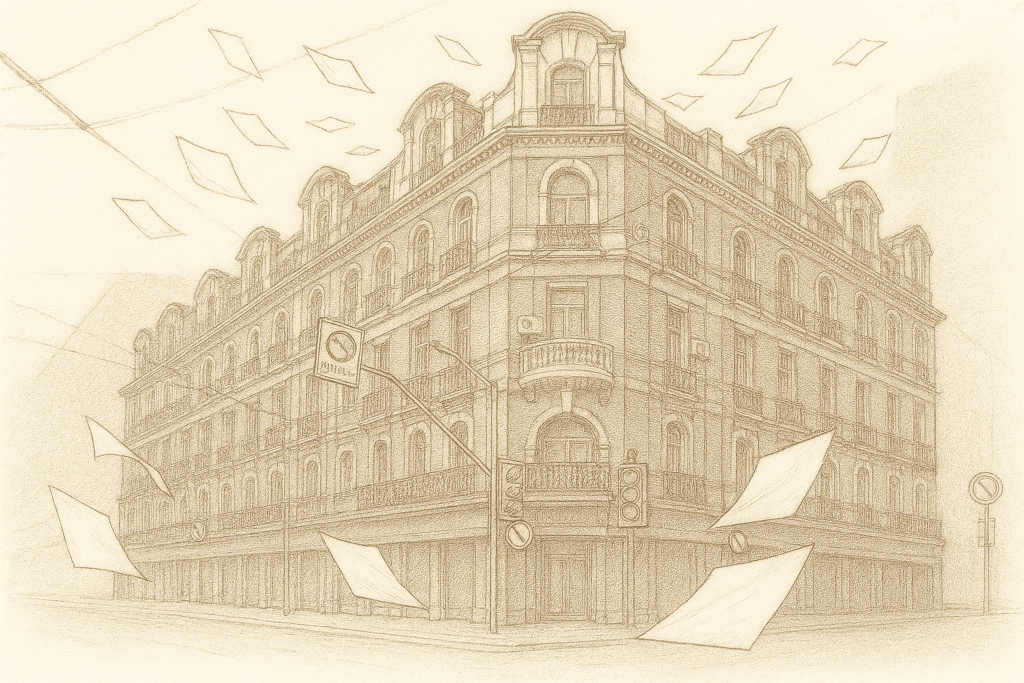
After Dui Hua registered as a non-profit in April 1999, we began visiting the University Services Center at the Chinese University of Hong Kong. Among the early find was the story of Yu Rong, who would drop leaflets around Shanghai as an act of protest after June 4th. Read the story
PRISONER UPDATES
Dui Hua’s Prisoner Updates provide the latest information staff researchers have uncovered through online and library research and through direct dialogue with the Chinese government.
Elder Li Yingqiang Charged With Inciting Subversion After Church Crackdown
Authorities have confirmed that elder Li Yingqiang (李英强) and another church member known as Brother Lin (林弟兄) have been formally charged with inciting subversion of state power. Read more
Hefei House Church Leaders Sentenced for Fraud
In Hefei, two house church leaders from Anhui were convicted for fraud. Pastor Zhou Songlin (周松林) was sentenced to four years and six months in prison and fined 30,000 yuan, while Elder Ding Zhongfu (丁中福) was sentenced to four years in prison and fined 28,000 yuan. Read more
Dui Hua Update
We’ll be moving to a new office space on April 1. Our new address is 450 Sutter Street, Suite 2011, San Francisco, CA 94108.